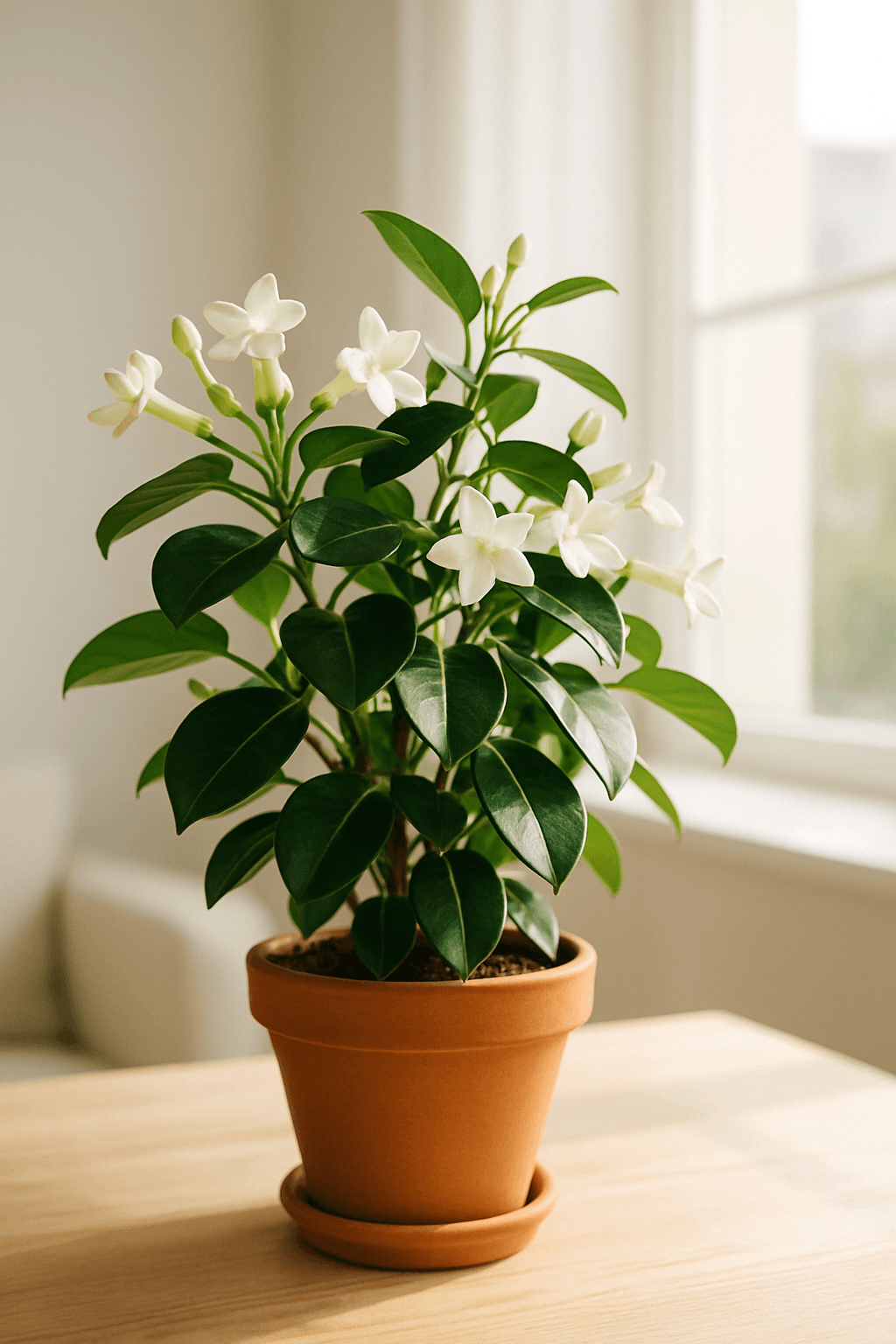
Bird's Nest Fern vs Stephanotis
Deciding between Bird's Nest Fern and Stephanotis? Both are solid choices with different care needs. Learn which fits your lifestyle.

Bird's Nest Fern vs Stephanotis: Quick Comparison
Bird's Nest Fern (Asplenium nidus): Low to medium indirect light, Every 7–10 days watering. Stephanotis (Stephanotis floribunda): Bright indirect light, Every 5–7 days watering. Different plants for different homes.
Bird's Nest Fern: Profile
Easy–Moderate difficulty. Low to medium indirect light. Every 7–10 days watering. Grows moderate. The wavy apple-green fronds emerge from a central crown that looks like a bird's nest. Never water into the crown or it rots. Excellent low-light bathroom or office plant due to high humidity tolerance. Non-toxic to pets.
Stephanotis: Profile
Difficult difficulty. Bright indirect light. Every 5–7 days watering. Grows moderate. Famous for intensely fragrant white waxy flowers — used in wedding bouquets. Notoriously fussy about conditions: moving the plant, temperature fluctuations, over or underwatering, or direct sun all cause bud drop. Keep conditions consistent. Toxic to pets.
Making Your Choice
Bird's Nest Fern works if you have Low to medium indirect light and can water Every 7–10 days. Stephanotis suits Bright indirect light and Every 5–7 days watering schedule. Match plant to your conditions.
Bottom Line
Both are worthwhile. Success comes from matching the plant to your home.
The Bottom Line
Pick Bird's Nest Fern or Stephanotis based on your light and watering commitment. Either choice works.
Frequently Asked Questions
Similar plants?▾
Different enough. Bird's Nest Fern needs Low to medium indirect. Stephanotis needs Bright indirect. Pick based on your light.
Which is easier?▾
Bird's Nest Fern: Easy–Moderate. Stephanotis: Difficult.
Can I keep both?▾
Yes, if conditions match. Most homes have room for both.
Growth rate?▾
Bird's Nest Fern grows moderate. Stephanotis grows moderate.