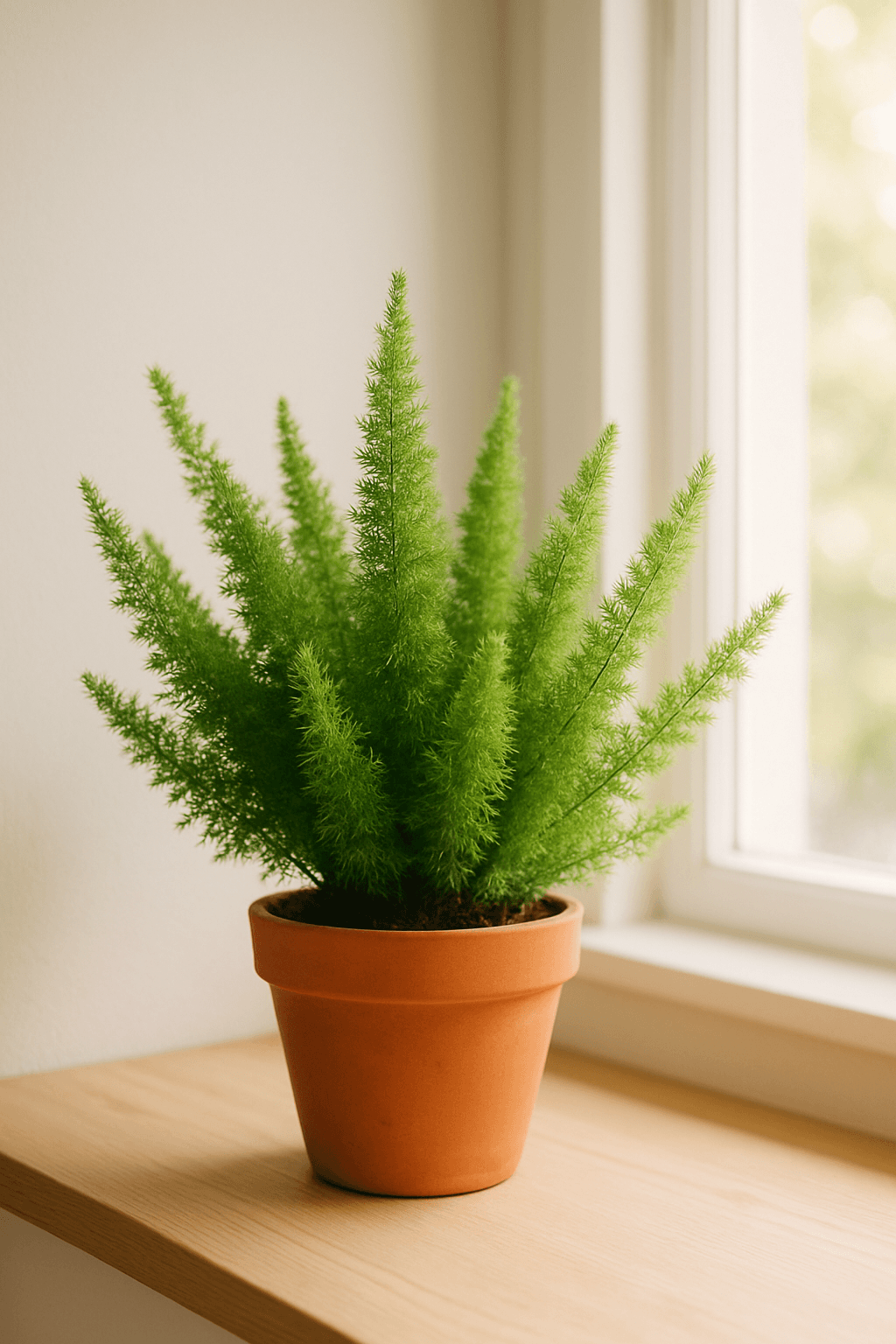
Foxtail Fern vs Indoor Primrose
Deciding between Foxtail Fern and Indoor Primrose? Both are solid choices with different care needs. Learn which fits your lifestyle.

Foxtail Fern vs Indoor Primrose: Quick Comparison
Foxtail Fern (Asparagus densiflorus 'Meyersii'): Bright indirect to full sun light, Every 5–7 days watering. Indoor Primrose (Primula obconica): Bright indirect light, Every 5–7 days watering. Different plants for different homes.
Foxtail Fern: Profile
Easy difficulty. Bright indirect to full sun light. Every 5–7 days watering. Grows fast. Despite the name, foxtail fern is not a true fern — it's a member of the asparagus family. The fluffy cylindrical fronds look like fox tails. Very adaptable and tough. The small red berries are toxic to pets.
Indoor Primrose: Profile
Easy–Moderate difficulty. Bright indirect light. Every 5–7 days watering. Grows moderate. A beautiful cool-season bloomer for late winter and early spring. Important: the sap of Primula obconica contains primin — a sensitizer that causes allergic contact dermatitis in many people. Wear gloves when handling. Toxic to pets. Cool temperatures extend blooming.
Making Your Choice
Foxtail Fern works if you have Bright indirect to full sun light and can water Every 5–7 days. Indoor Primrose suits Bright indirect light and Every 5–7 days watering schedule. Match plant to your conditions.
Bottom Line
Both are worthwhile. Success comes from matching the plant to your home.
The Bottom Line
Pick Foxtail Fern or Indoor Primrose based on your light and watering commitment. Either choice works.
Frequently Asked Questions
Similar plants?▾
Different enough. Foxtail Fern needs Bright indirect to full sun. Indoor Primrose needs Bright indirect. Pick based on your light.
Which is easier?▾
Foxtail Fern: Easy. Indoor Primrose: Easy–Moderate.
Can I keep both?▾
Yes, if conditions match. Most homes have room for both.
Growth rate?▾
Foxtail Fern grows fast. Indoor Primrose grows moderate.