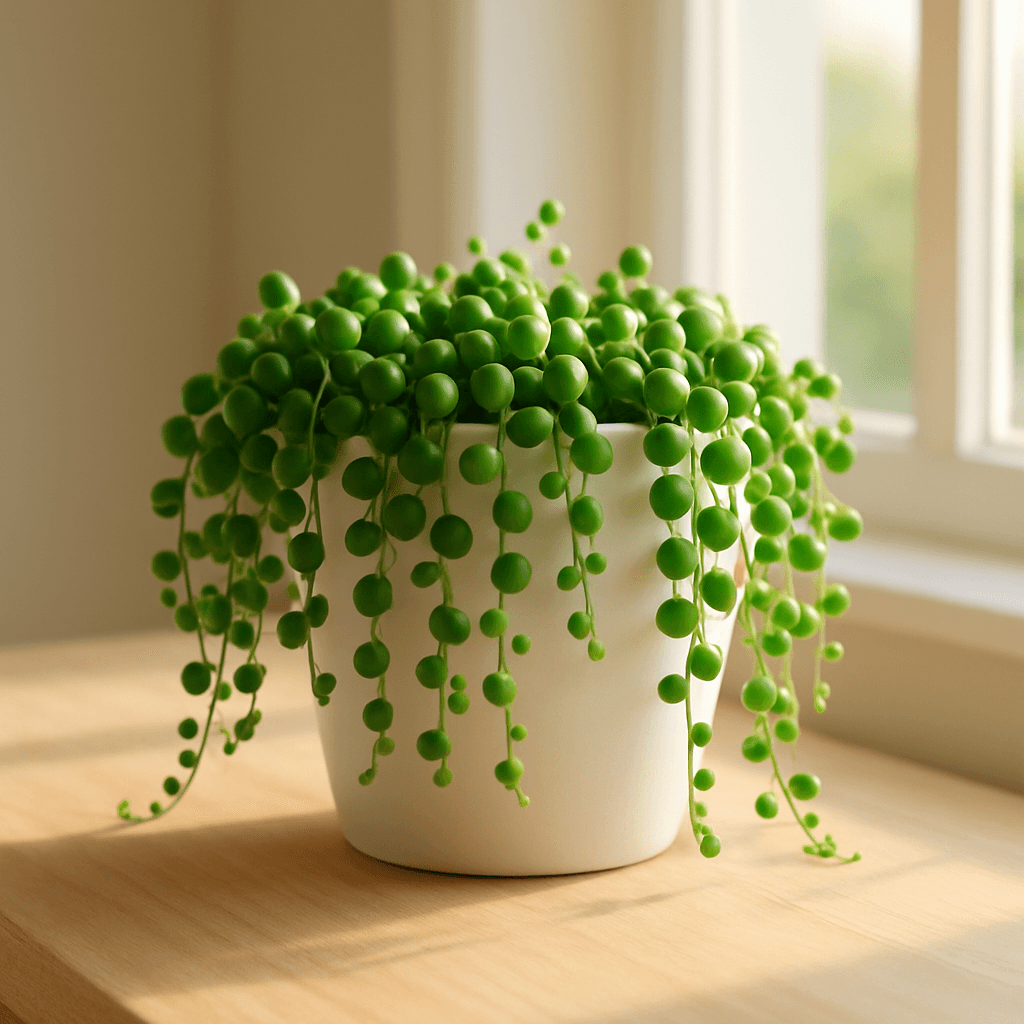
String of Pearls vs Donkey Tail: Trailing Succulent Face-Off
String of pearls and donkey tail are the two most striking trailing succulents in the common market, and they're both finicky in similar ways. Both want serious light. Both rot quickly if overwatered. Both are fragile; the leaves detach easily and don't reattach. Get their conditions right, though, and they're among the most dramatic hanging plants you can grow indoors.

String of Pearls vs Donkey Tail: Quick Comparison
Both are trailing succulents that need bright light and careful watering to stay healthy.
String of pearls (Curio rowleyanus): bright indirect to direct light, water every 2–3 weeks, moderate difficulty, low humidity (30–40%), toxic to pets and mildly toxic to humans.
Donkey tail (Sedum morganianum): bright indirect to direct light, water every 2–3 weeks, moderate difficulty, low humidity (30–50%), non-toxic to humans, mildly toxic to pets.
Honestly, care requirements are nearly identical. The differences are mostly about leaf shape, fragility, and how each handles neglect.
String of Pearls: Overview
String of pearls (Curio rowleyanus) trails long strands of round, pea-like leaves that store water inside. In the right spot, those strands reach 2–3 feet and look spectacular in a hanging basket. In a spot with too little light, the pearls shrink, space out on the stem, and the plant gets sparse and sad-looking.
Water every 2–3 weeks in summer when the soil is completely dry. Less in winter, sometimes as infrequently as once a month. Root rot from overwatering is by far the most common cause of death. Low humidity (30–40%) suits it; standard home air is usually fine. Bright indirect to direct light is non-negotiable; a south or west window is ideal.
Toxic to cats, dogs, and mildly irritating to humans (ASPCA). Handle with care and keep away from children and pets.
Donkey Tail: Overview
Donkey tail (Sedum morganianum) produces tightly-packed, overlapping blue-green leaves along trailing stems that can reach 4 feet. Each leaf is slightly flattened and covered in a powdery bloom. Mature plants in a large hanging pot look impressive. Young plants look more modest; this one rewards patience.
Care mirrors string of pearls: water every 2–3 weeks when soil is fully dry, give it maximum light, and keep humidity low. It's actually slightly more drought-tolerant than string of pearls once established. The main frustration is how easily the leaves fall off when touched or moved; the powdery coating doesn't help you grip them.
Generally considered non-toxic to humans and mildly toxic to pets. Keep it out of reach of pets regardless.
Key Differences That Matter
Fragility is the biggest practical difference. String of pearls loses pearls easily but they're small enough that a few falling off isn't dramatic. Donkey tail loses entire clusters of leaves when disturbed, and once established in a pot, moving it even slightly causes noticeable leaf drop. Find it a permanent spot and leave it there.
Leaf shape creates very different looks. String of pearls trails in elegant, bead-like strands. Donkey tail produces denser, fleshier trailing stems that look more like a cascading column. Both are striking; the choice is aesthetic.
Overall toughness tilts slightly toward donkey tail once it's established. String of pearls is more sensitive to overwatering and lower light. In practice, both are moderately challenging to keep looking great long-term.
Drought tolerance is similar for both; both handle dry spells better than most houseplants but decline quickly in soggy soil.
Which One Should You Pick?
Choose string of pearls if you want the bead-like trailing look and have a very bright spot, ideally near a south-facing window. It's the more photogenic of the two in the right conditions. Don't buy it for a dim room expecting it to manage; it won't.
Choose donkey tail if you want something slightly more forgiving once established, prefer the dense trailing stem look, and can commit to leaving it in one spot. Find it a home near your brightest window and resist the urge to move it.
For both: get the light right first. Everything else is secondary.
The Bottom Line
String of pearls wins on visual drama in the right conditions. Donkey tail wins on toughness once it's established. Both need serious light and minimal water. If you can give them that, either one makes a hanging basket worth stopping to look at.
Frequently Asked Questions
Is string of pearls or donkey tail easier to care for?▾
Both are moderate in difficulty, not beginner plants. Donkey tail is slightly more forgiving of drought once established; string of pearls is more sensitive to overwatering and low light. Neither is a good choice if your best window is north-facing or if you tend to overwater.
Can both survive in low light?▾
No. Both require bright indirect to direct light. In low light, string of pearls develops widely-spaced, shrunken pearls and the stems go bare. Donkey tail stops growing and gradually declines. A south or west-facing windowsill is the right home for both.
Which is safer for pets?▾
Neither is fully safe. String of pearls is toxic to cats and dogs and mildly irritating to humans (ASPCA). Donkey tail is considered mildly toxic to pets. Keep both out of reach of animals and small children.
What's the ideal humidity for each?▾
Both prefer low humidity, around 30–40% for string of pearls and 30–50% for donkey tail. Standard home humidity is usually fine. High humidity and poor air circulation increase the risk of rot and fungal problems, especially in winter.