Aloe Vera vs Haworthia: Best Succulent for Beginners?
Aloe vera and haworthia share the same basic care routine: water every 2–3 weeks in summer, less in winter, well-draining gritty soil, and a pot with drainage holes. The differences that actually matter are light and pet safety. Aloe needs direct or bright indirect sun and is toxic to cats and dogs. Haworthia handles lower light and is completely pet-safe.

Aloe Vera vs Haworthia: At a Glance
Both are rosette-forming succulents with similar care requirements, but they suit different homes.
Aloe vera (Aloe barbadensis miller): bright indirect to direct light, water every 2–3 weeks in summer and every 4–6 weeks in winter, difficulty easy, low humidity (30–40%), toxic to pets. Haworthia (Haworthiopsis attenuata): bright indirect to filtered light, water every 2–3 weeks in summer and every 4–6 weeks in winter, difficulty easy, low humidity (30–40%), pet-safe.
Watering schedules are nearly identical. Light is the biggest practical difference — aloe needs a south- or west-facing window with real sun, while haworthia thrives in bright indirect light and tolerates east-facing exposures.
Aloe Vera: What You Need to Know
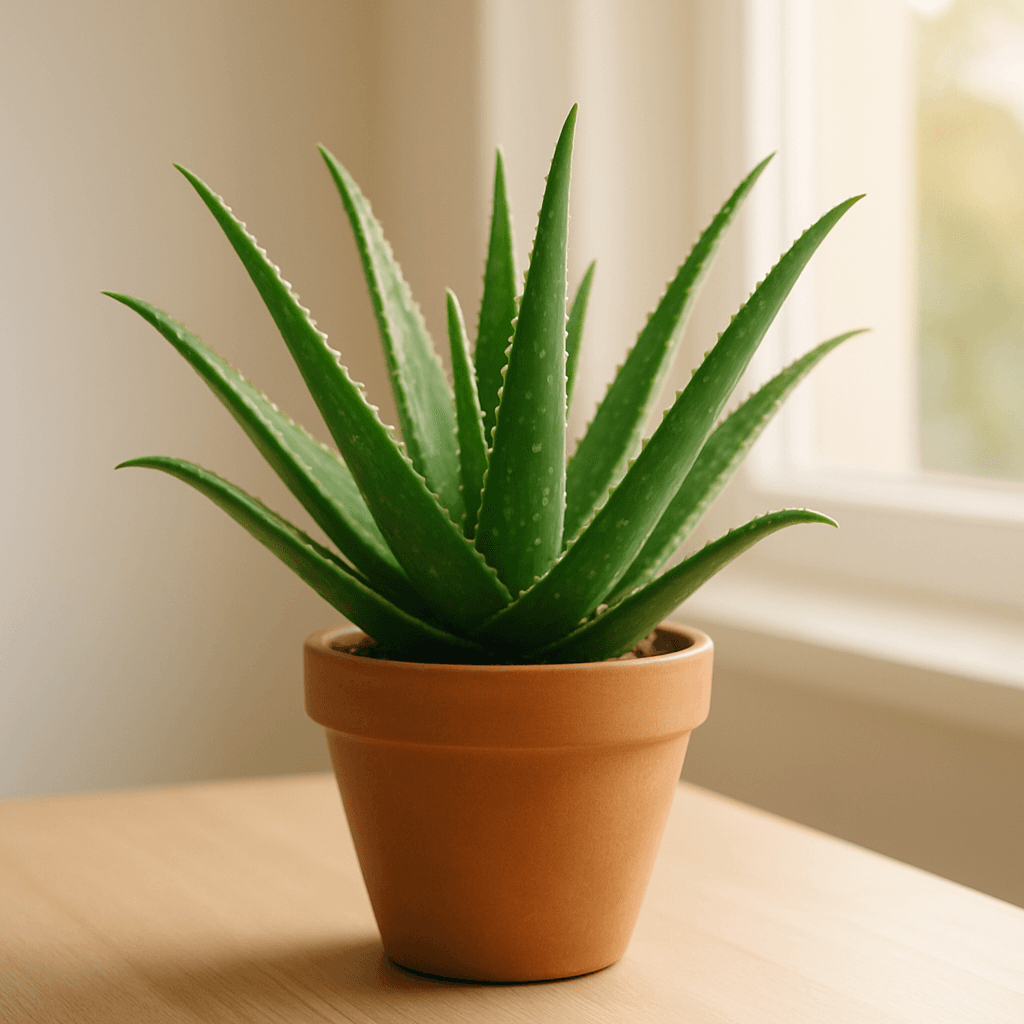
Aloe vera (Aloe barbadensis miller) is best known for the clear gel in its leaves, useful topically for minor burns and skin irritation. It needs bright light — a south-facing windowsill with 4–6 hours of direct sun is ideal. In lower light, the leaves stretch toward the source and become pale and thin, a sign called etiolation.
Water every 2–3 weeks in summer when the soil is completely dry, pulling back to every 4–6 weeks in winter. Standard cactus and succulent mix in a terracotta pot with drainage works well.
Toxic to cats and dogs. Aloe contains saponins and anthraquinones that cause vomiting, diarrhea, and lethargy in pets (ASPCA). Keep it on a high shelf or out of reach.
Haworthia: What You Need to Know
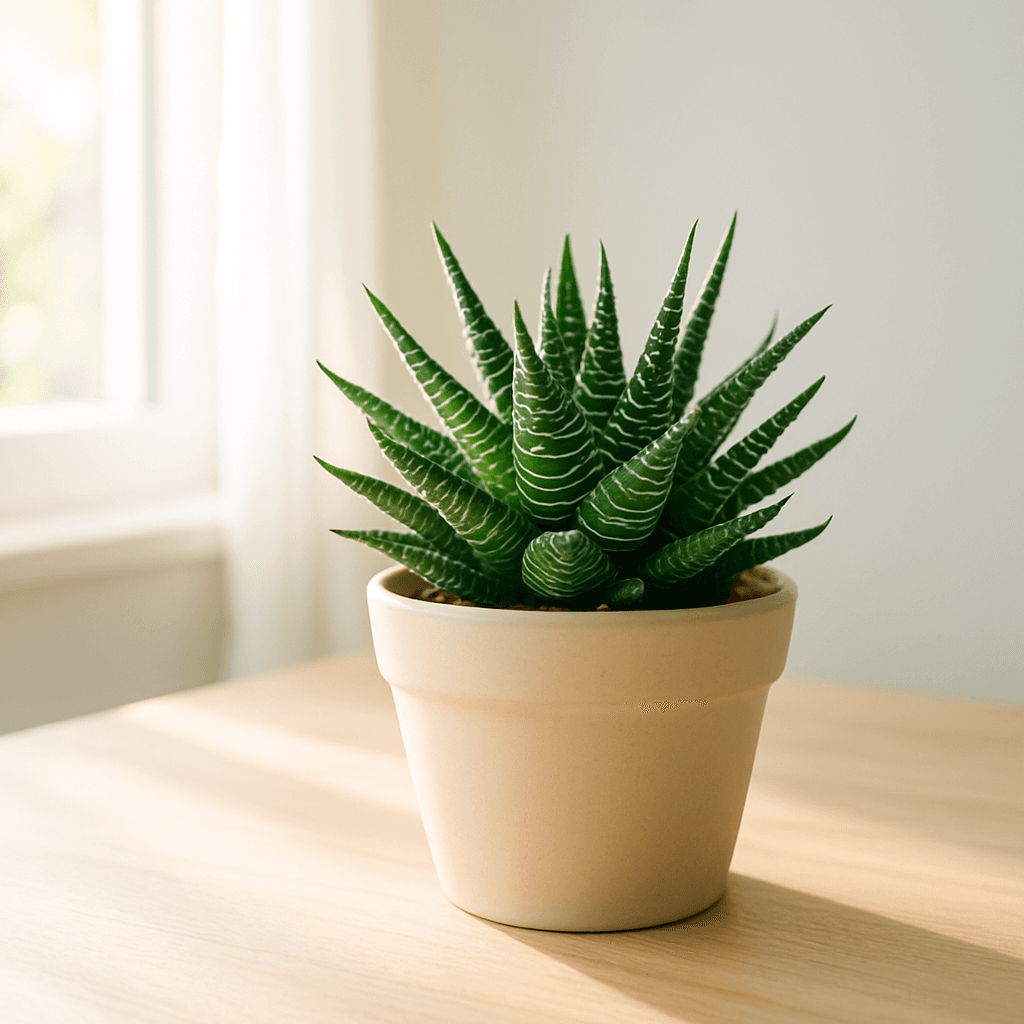
Haworthia (most commonly Haworthiopsis attenuata, the zebra plant) is a compact succulent with distinctive white horizontal stripes on its leaves. It stays small — rarely over 4–6 inches — making it ideal for desks and shelves with limited space.
It handles lower light than most succulents. While aloe stretches and pales in indirect light, haworthia tolerates east-facing windows and bright interior spots without complaint. A dim corner will eventually stall its growth, but it holds on much longer than aloe would.
Same watering schedule as aloe, same well-draining gritty soil, same preference for terracotta pots. Completely pet-safe. Haworthia also propagates easily from offsets (pups) that appear at the base.
What Actually Sets Them Apart?
Light tolerance is the most practical difference. Aloe wants real sun; haworthia tolerates lower light and won't etiolate the way aloe does without a sunny window.
Size is the next dividing line. Aloe vera can reach 2 feet across in good conditions. Haworthia stays under 6 inches. For a windowsill or desk with limited space, haworthia is the obvious fit.
Pet safety makes the decision easy for households with animals. Aloe is toxic to cats and dogs (ASPCA); haworthia is completely safe.
The medicinal angle belongs to aloe. Snapping a leaf and applying the gel to a minor burn or sunburn is a genuine household use. Haworthia has no comparable functional purpose beyond being an attractive, easy plant.
Which Should You Choose?
Choose haworthia if you have pets, limited direct sun, or want something small enough for a desk or narrow windowsill. It's genuinely easier to succeed with in most apartments and homes.
Choose aloe vera if you have a south- or west-facing window with direct sun, no pets that chew plants, and want the practical benefit of fresh gel for minor skin irritation.
The mistake most people make with either one is overwatering — when unsure, wait an extra week.
The Bottom Line
Haworthia is the safer beginner choice in most homes: pet-safe, compact, and more tolerant of indirect light. Aloe vera wins if you have a sunny window and want a plant with a practical use. Both fail the same way — overwatering — so err on the side of neglect.
Frequently Asked Questions
Can haworthia grow in low light?▾
Haworthia tolerates lower light than most succulents and handles east-facing windows or bright indirect light without stretching. It won't grow actively in low light, but it holds on longer than aloe would. True low light — a dark room with no nearby window — will stall it over time. Bright indirect light is the sweet spot.
Is aloe vera safe for cats?▾
Aloe vera is toxic to cats and dogs. It contains saponins and anthraquinones that cause vomiting, diarrhea, and lethargy when ingested (ASPCA). Keep it out of reach of pets. Haworthia is a good pet-safe alternative with similar care requirements and a compact size that's easier to place safely.
How often should I water aloe vera vs haworthia?▾
Water both every 2–3 weeks in summer and every 4–6 weeks in winter, when the soil is completely dry. Both store water in their leaves and are far more likely to die from overwatering than drought. Use a terracotta pot with drainage holes — they help soil dry out faster and prevent root rot.
Why is my aloe vera turning yellow?▾
Yellow aloe leaves usually point to overwatering or low light. Overwatering causes mushy, translucent yellowing starting from the base; low light causes pale, washed-out yellowing across the whole plant. Check the soil — if it's wet or smells musty, let it dry completely and consider repotting into fresh cactus mix if roots are rotting.