Hoya vs String of Hearts: Trailing Plant Showdown
Hoya and string of hearts are two of the best trailing plants for beginners: both pet-safe, both low-maintenance, both happy in bright indirect light. String of hearts (Ceropegia woodii) is semi-succulent and handles 3–4 weeks without water in summer. Hoya carnosa blooms — clusters of waxy, star-shaped flowers with a faint sweet scent — if you give it enough light.

Hoya vs String of Hearts: At a Glance
Both are trailing plants with succulent-like drought tolerance, making them unusually forgiving for hanging baskets.
Hoya (Hoya carnosa): bright indirect light, water every 1–2 weeks in summer and every 3–4 weeks in winter, difficulty easy, medium humidity (40–60%), pet-safe. String of hearts (Ceropegia woodii): bright indirect light, water every 1–2 weeks in summer and every 3–4 weeks in winter, difficulty easy, low-medium humidity (40–50%), pet-safe.
On paper they're nearly identical. The differences show up in drought tolerance, appearance, and flowering. String of hearts' semi-succulent stems handle drought slightly better; hoya rewards consistent bright light with flowers that string of hearts never produces.
Hoya: What You Need to Know
Hoya carnosa produces clusters of star-shaped flowers, called umbels, with a sweet, faintly honey-like scent. The flowers appear on old spurs — short woody stems — so the rule that matters most for flowering is this: never remove the spent flower stalks. New flowers emerge from the same spurs year after year.
Bright indirect light is the sweet spot; a few hours of morning direct sun often promotes better flowering. Water every 1–2 weeks in summer and every 3–4 weeks in winter — hoya's thick, waxy leaves store water and handle missed waterings without complaint.
Hoya comes in dozens of varieties: H. pubicalyx (faster-growing, darker leaves), H. kerrii (heart-shaped leaves), and H. linearis (thin trailing stems). Pet-safe for cats and dogs.
String of Hearts: What You Need to Know
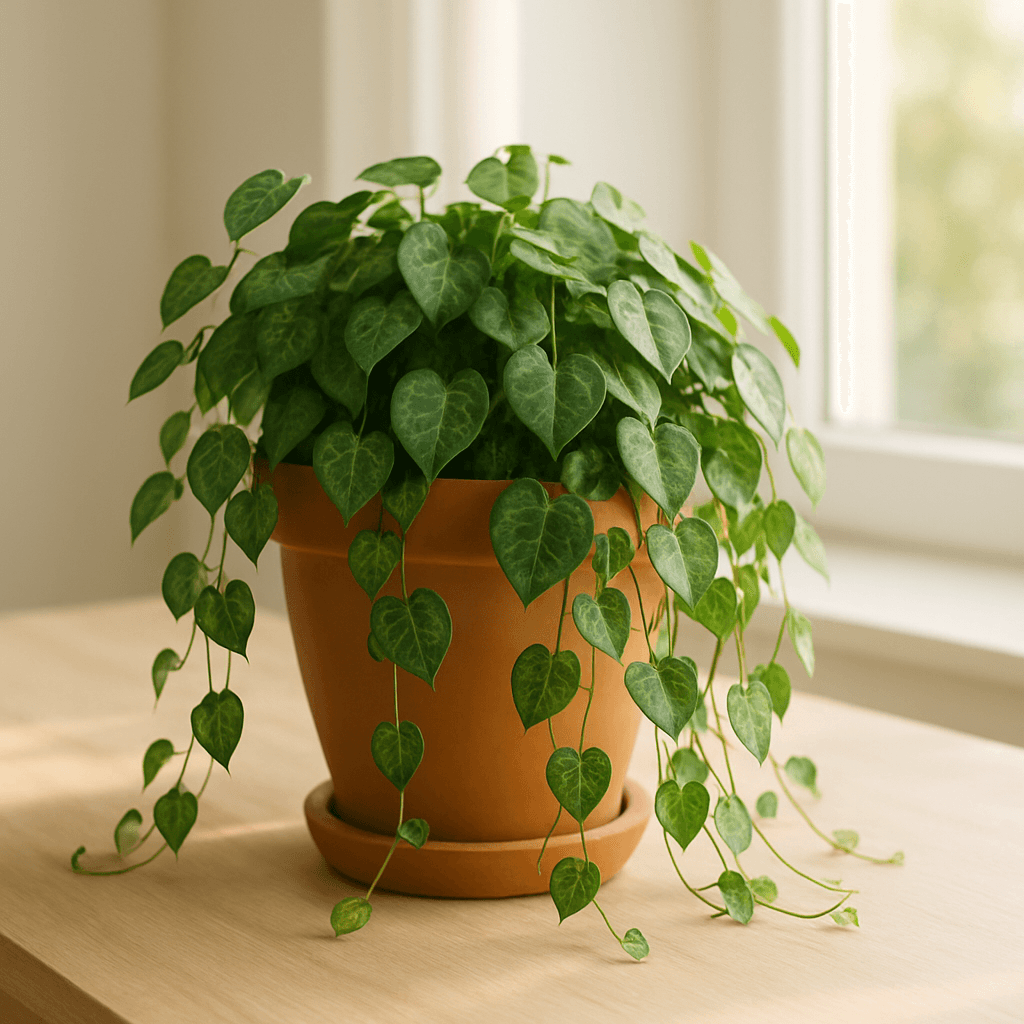
String of hearts (Ceropegia woodii) produces long, delicate trailing vines with small heart-shaped leaves in dark green with silver marbling on top and purple underneath. It's semi-succulent, which means it tolerates drought better than most plants its size.
Bright indirect light keeps the leaf colours vivid. In lower light, the silver marbling fades and the purple underside becomes less pronounced. A few hours of morning sun is fine and helps maintain colouring.
Water every 1–2 weeks in summer when the soil is dry, and every 3–4 weeks in winter. String of hearts stores water in its tubers as well as its stems, giving it genuine drought resilience. The most common mistake is overwatering, which causes root rot quickly.
Small tuberous bulbs may form along the vines — plant these into soil to propagate new plants. Pet-safe for cats and dogs.
What Actually Sets Them Apart?
Flowering is hoya's exclusive advantage. String of hearts produces small, lantern-shaped pink-purple flowers occasionally, but they're not the main event. Hoya's waxy, clustered star flowers are visually striking and fragrant — a genuine payoff for a plant that's otherwise easy to care for.
Drought tolerance slightly favours string of hearts. Its tubers and semi-succulent stems give it a buffer that hoya approaches but doesn't quite match.
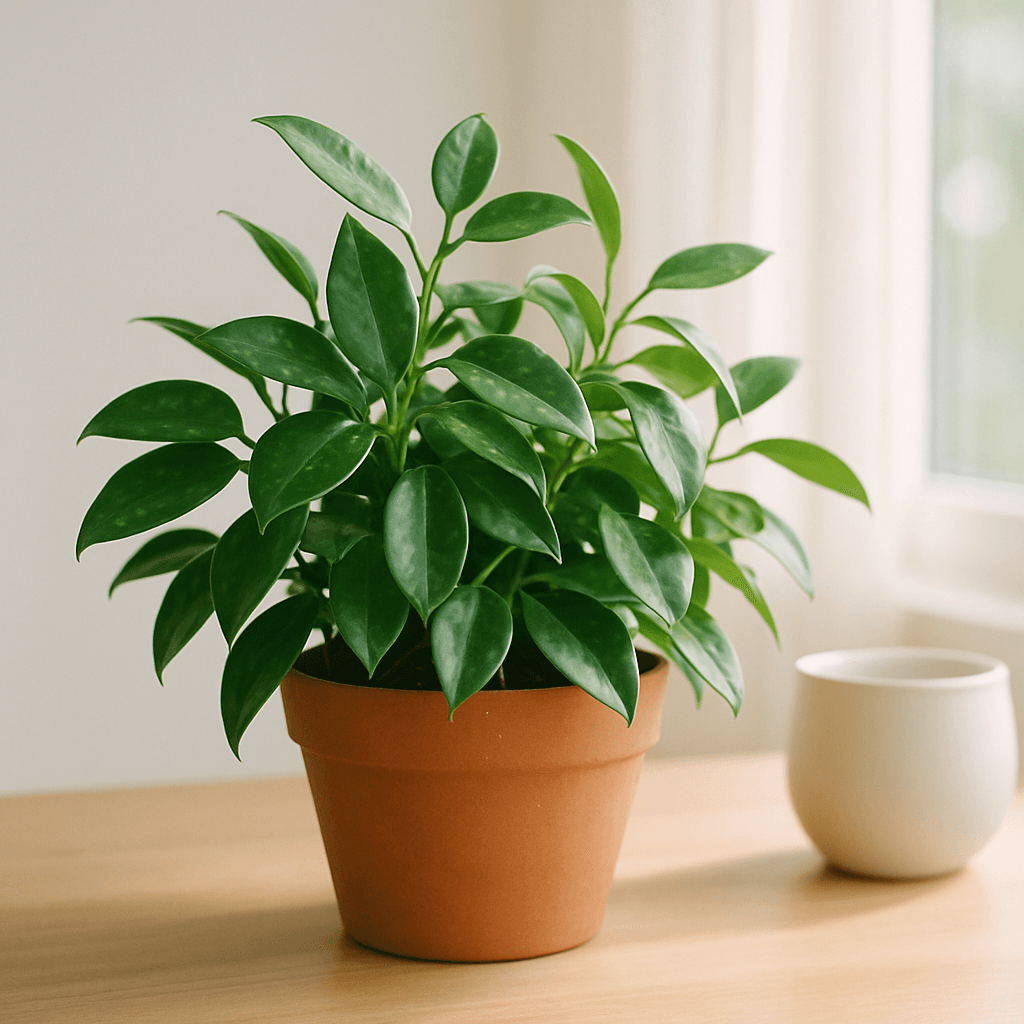
Appearance is the most obvious difference. Hoya carnosa produces broad, thick, waxy green leaves (or variegated forms with pink and cream). String of hearts produces tiny heart-shaped leaves on long, delicate vines. For hanging baskets, string of hearts creates a curtain effect; hoya is fuller and bushier.
Both are pet-safe and easy enough for complete beginners.
Which Should You Choose?
Choose hoya if you want a trailing or climbing plant that flowers. Give it bright indirect light with a few hours of morning sun, leave the spent flower stalks in place, and it rewards you with clusters of waxy flowers seasonally.
Choose string of hearts if you want a delicate, curtain-like trailing aesthetic with small patterned leaves. It's slightly more drought-tolerant, takes up less visual space, and has a more unusual appearance than standard hoya cultivars.
Both are excellent in hanging baskets on a bright windowsill. If you can only pick one: hoya is the better all-round plant for most growers.
The Bottom Line
Both are excellent trailing plants for bright windowsills, and both are pet-safe. Choose hoya for flowering and a fuller look; choose string of hearts for delicate cascading vines and slightly better drought tolerance.
Frequently Asked Questions
Why won't my hoya bloom?▾
Most hoya flowering problems come down to light. Hoya carnosa needs bright indirect light with some direct sun to flower — a spot a foot or two from a south- or east-facing window is usually enough. Check that you haven't removed the spent flower spurs (the short woody stems where flowers appeared). New flowers emerge from the same spurs, so cutting them off prevents future blooms. Young plants rarely flower in their first year.
Can string of hearts grow in low light?▾
String of hearts technically survives in lower light, but it loses what makes it appealing: the silver marbling fades, the purple underside disappears, and the vines become leggy. For the best colour and compact growth, give it bright indirect light with a few hours of morning sun. Low light is a last resort, not a preference.
Are hoya and string of hearts safe for cats?▾
Both are pet-safe and non-toxic to cats and dogs. This is a genuine advantage — many trailing plants (pothos, philodendron) are toxic to pets. Both hoya and string of hearts can trail within reach of curious cats without posing a toxicity risk.
How often should I water hoya vs string of hearts?▾
Water both every 1–2 weeks in summer when the soil is completely dry, and every 3–4 weeks in winter. Both store water in their leaves or tubers and handle underwatering better than overwatering. Root rot from consistently wet soil is the most common way to lose either plant. Use a well-draining mix and a pot with drainage holes.