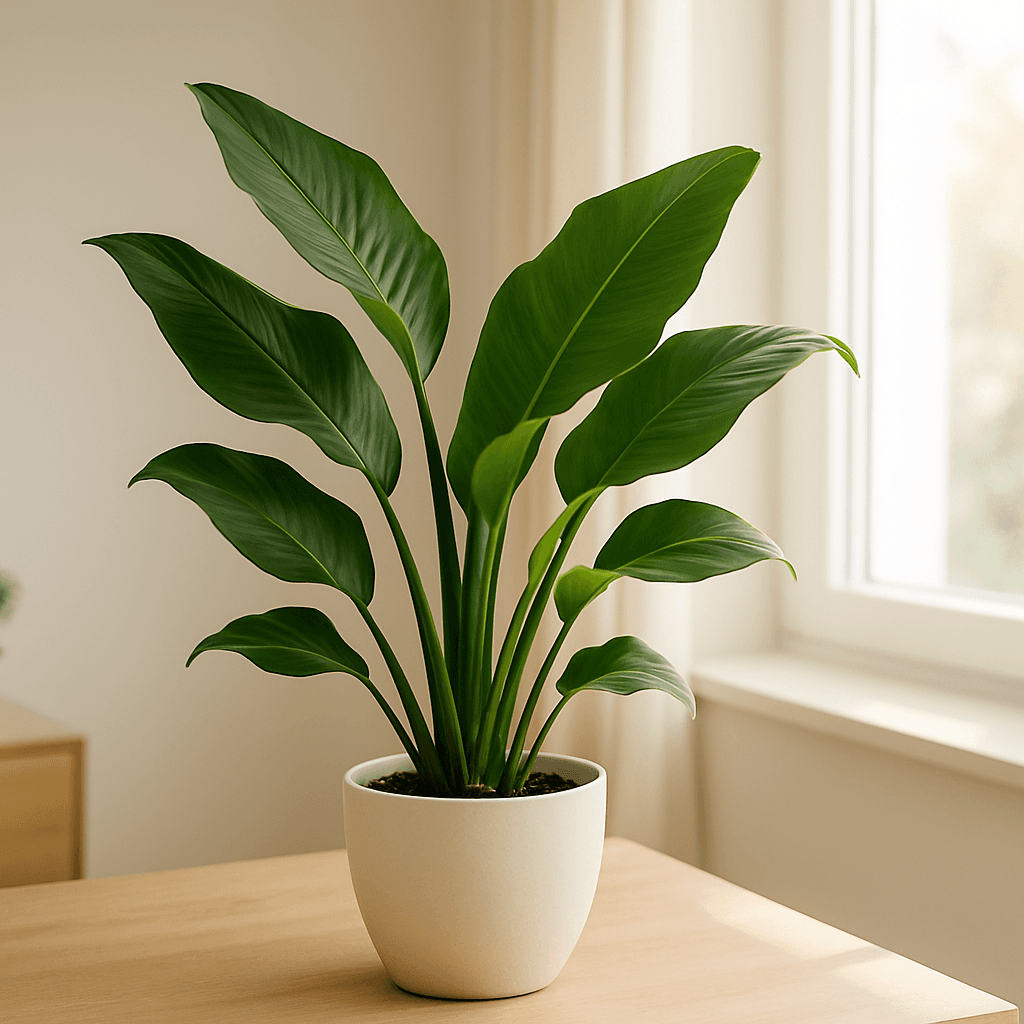
Monstera vs Bird of Paradise: The Ultimate Showdown
Monstera vs bird of paradise splits cleanly on two questions: do you have pets, and how much light does your space get? Bird of paradise (Strelitzia nicolai) is pet-safe and needs maximum light. Monstera (Monstera deliciosa) is toxic to cats and dogs but tolerates medium light. Beyond that, the two plants are very different to live with.
How Do Monstera and Bird of Paradise Compare?
Both are large statement plants that can reach ceiling height indoors, but they suit very different homes.
Monstera deliciosa is rated easy. It tolerates medium to bright indirect light, needs watering every 1–2 weeks in summer and every 2–4 weeks in winter, and reaches 2–8 feet indoors. It needs 50–60% humidity and is toxic to cats and dogs.
Bird of paradise (Strelitzia nicolai) is rated moderate. It needs maximum light — a south-facing window is the minimum. Water every 1–2 weeks in summer and every 2–3 weeks in winter. It reaches 5–8+ feet indoors, handles humidity as low as 40%, and is pet-safe.
One thing most buyers miss: bird of paradise requires a minimum temperature of 65°F. Monstera handles 60°F. Cold draughts near windows in winter can damage bird of paradise in ways that monstera would shrug off.
Monstera: What You Need to Know
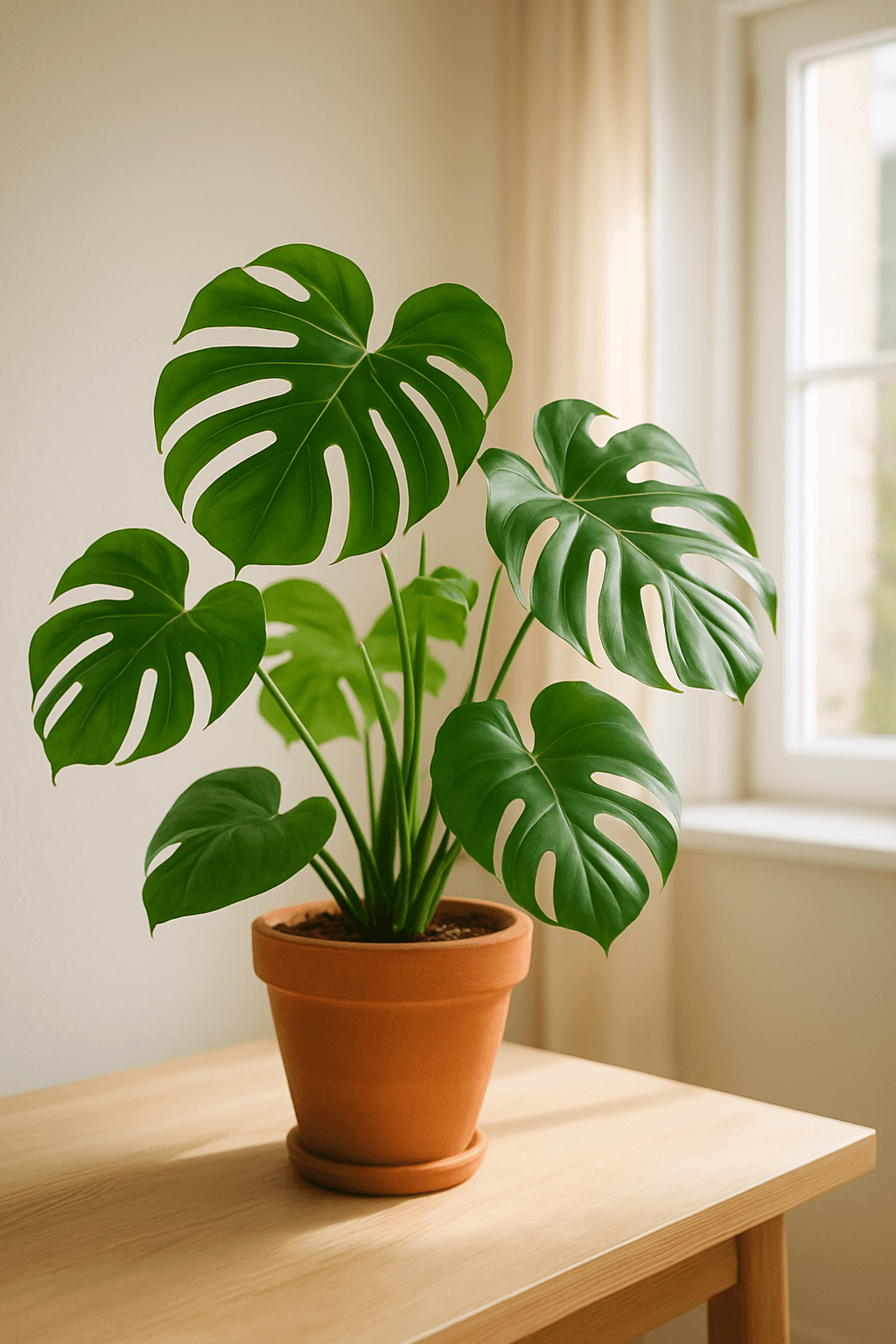
Monstera deliciosa is the iconic split-leaf plant — the one with holes in the leaves. Those holes, called fenestrations, only develop in bright enough light. Plants kept in medium or low light stay whole-leaf, which surprises a lot of buyers expecting the trademark look straight away.
Care is genuinely beginner-friendly: water every 1–2 weeks in summer when the top 2 inches of soil dry out, pulling back to every 2–4 weeks in winter. Bright indirect light produces the best growth and the most fenestrations. Direct sun scorches the leaves.
Plan for a 4–6 foot wide spread indoors. A heavy pot and a moss pole get the best results — monstera climbs in the wild and grows bigger leaves with more fenestrations when it has something to cling to. Humidity at 50–60% prevents brown edges.
One firm limit: monstera is toxic to cats, dogs, and children. Calcium oxalate crystals cause oral burning, drooling, and GI distress.
Bird of Paradise: What You Need to Know
Bird of paradise (Strelitzia nicolai) is a high-light floor plant with real presence. It reaches 5–8+ feet indoors with enormous paddle-shaped leaves that split naturally as the plant matures. That splitting is normal — in the wild, wind splits the leaves to reduce drag. Indoors, it's a sign of a healthy adult plant, not something to fix.
The one non-negotiable: light. Bird of paradise needs maximum light — at minimum a south-facing window with 6+ hours of bright exposure. In medium light, growth stalls. In low light, the plant slowly declines. Most people who struggle with this plant have it in the wrong spot, not the wrong care routine.
Water every 1–2 weeks in summer when the top 2 inches dry out, and every 2–3 weeks in winter. It tolerates humidity as low as 40% and needs a large, heavy pot — a mature plant becomes seriously top-heavy.
The standout advantage over monstera: bird of paradise is pet-safe.
Key Differences That Actually Matter
Pet safety. This single factor settles the debate for many buyers. Bird of paradise leaves are pet-safe; monstera is toxic to cats and dogs (ASPCA). If you have animals, bird of paradise is the only viable option of the two.
Light requirements. Monstera tolerates medium light and grows well a few feet back from a window. Bird of paradise needs maximum light and declines in anything less than a bright south-facing window. Limited natural light means monstera is your only realistic choice.
Difficulty. Monstera is rated easy; bird of paradise is rated moderate. The challenge with bird of paradise isn't watering — it's maintaining high light consistently through winter, which is harder than it sounds in most homes.
Propagation. Monstera roots easily from stem cuttings in water or soil. Bird of paradise can only be propagated by division or slow-germinating seeds — much harder to multiply.
Leaf features. Monstera develops holes (fenestrations) with age and light. Bird of paradise leaves split at the edges naturally. Both features are specific to each plant and part of the appeal.
Which One Should You Choose?
Pets in the house? Bird of paradise, without question. Monstera's toxicity makes it a genuine risk for cats and dogs, and bird of paradise is one of very few large indoor plants that's safe alongside animals.
Limited natural light? Monstera. Bird of paradise in a medium-light room is a slow decline. Monstera handles it without complaint.
First-time plant owner? Monstera again. Easy difficulty, forgiving of inconsistent watering, and adaptable to a wide range of home conditions.
Want a plant that can bloom indoors? Bird of paradise. Monstera rarely flowers indoors. A mature, pot-bound bird of paradise in maximum light may eventually produce its striking orange-and-blue flowers — though it typically takes 3–5+ years to reach that stage.
Concerned about space? Monstera is more manageable. It grows upright with a moss pole and can be guided. Bird of paradise spreads wide once mature and is difficult to contain.
The Bottom Line
Monstera wins for most homes because it handles more conditions with less fuss. Bird of paradise is the right call for pet owners and anyone with a genuinely sun-drenched south-facing room. Pick the one that matches your light and your household.
Frequently Asked Questions
Is bird of paradise toxic to cats?▾
The leaves of bird of paradise (Strelitzia nicolai) are generally considered pet-safe. The flowers and seeds carry mild toxicity that can cause nausea in cats and dogs (ASPCA), but the leaves — the part most pets actually chew — are safe. Monstera, by contrast, is toxic throughout and causes oral burning and GI distress in both cats and dogs.
Can bird of paradise grow in low light?▾
No. Bird of paradise is one of the most light-hungry large houseplants you can own. In low to medium light, it stops growing, produces pale undersized leaves, and eventually declines. A south-facing window with at least 6 hours of bright light is the minimum. If your space doesn't have that, choose monstera instead.
Why are my bird of paradise leaves splitting?▾
Splitting is completely normal and a sign of a healthy adult plant. In the wild, large bird of paradise leaves split in wind to reduce drag and prevent damage. Indoors, splits appear as the leaves reach full size and the plant matures. Nothing is wrong — no intervention needed.
Does monstera need a moss pole?▾
Not required, but it makes a noticeable difference. Monstera climbs trees in the wild, and a pole mimics that structure. With one, leaves grow larger and develop more pronounced fenestrations. Without one, the plant sprawls outward and stays smaller. For any monstera taller than 2 feet, a moss pole is worth the investment.
How long does it take bird of paradise to grow tall indoors?▾
Bird of paradise grows at a moderate pace indoors — expect 1–2 new leaves per month during peak growing season in good light. Reaching ceiling height of 6–8 feet typically takes 5–10 years depending on pot size, light quality, and care. Most buyers see significant height within 3–5 years in a genuinely sunny room.