Monstera Care Guide
Monstera deliciosa
Quick Answer
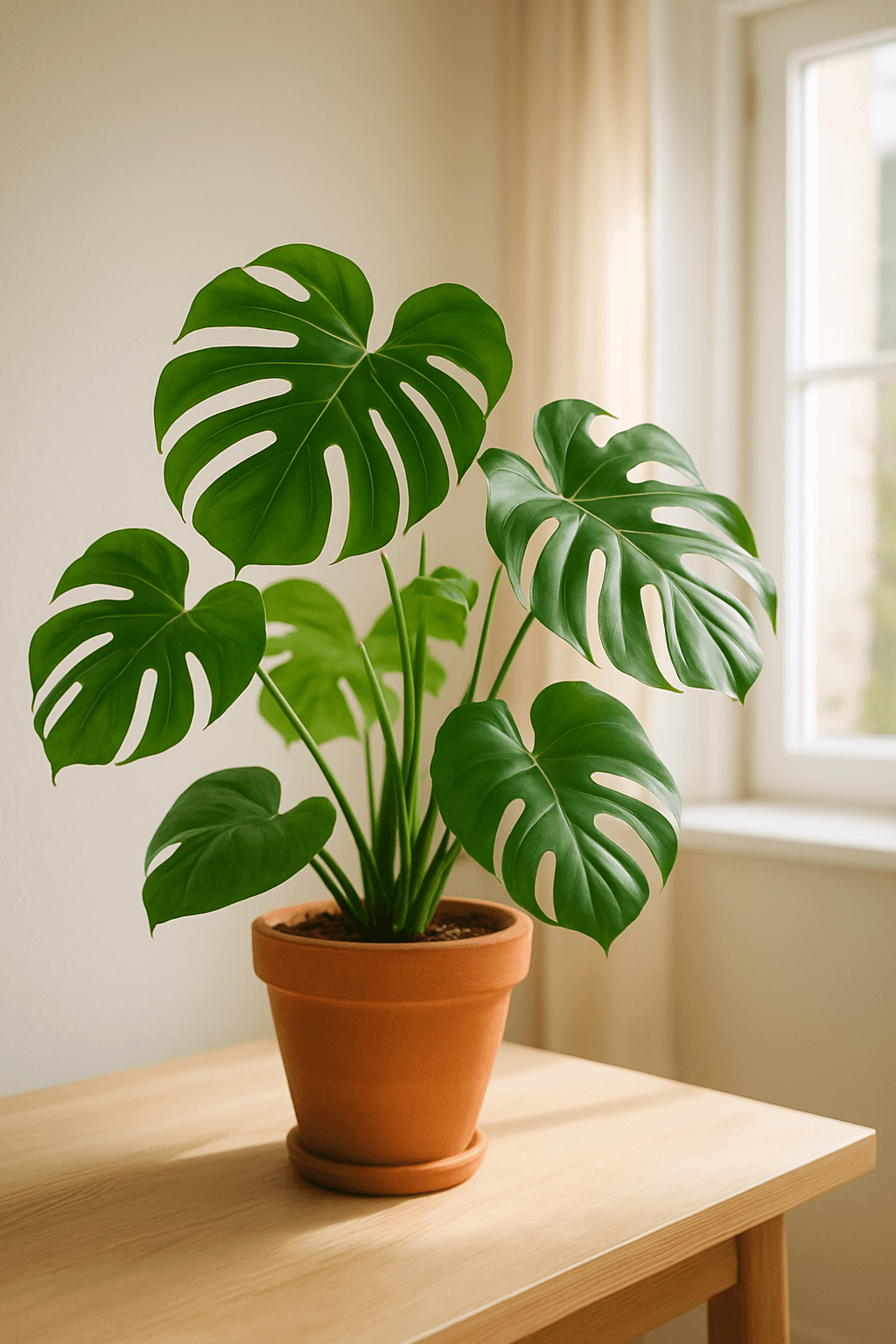
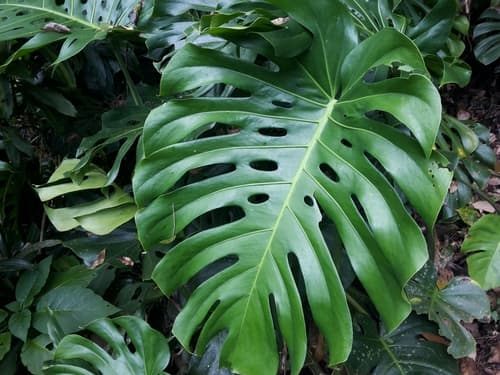
The biggest mistake people make with monstera is keeping it in a dim corner and expecting those iconic split leaves to appear — they won't. Monstera needs genuinely bright indirect light to fenestrate, and without it, you'll get big, solid, hole-free leaves that look more like a basic houseplant than the statement piece you bought. Get the light right first, and almost everything else about this plant is forgiving.
⭐Difficulty
Easy
☀️Light
Bright indirect
💧Watering
Every 1–2 weeks
🌫️Humidity
Medium–High (50–60%)
🌡️Temperature
60–85°F
📈Growth Rate
Moderate–Fast
Toxicity
Source: ASPCA Animal Poison Control
Watering
Summer
Every 1–2 weeks
Winter
Every 2–4 weeks
Method: Water thoroughly, allow top 2 inches to dry
Light Requirements
Bright indirect
Monstera wants bright indirect light — think 3 to 5 feet from a south- or west-facing window, where it gets strong ambient light without direct sun hitting the leaves and scorching them. If your space only has north-facing windows or you're noticing slow growth and no fenestrations, a full-spectrum grow light running 12 hours a day positioned 12 inches above the plant will make a real difference.
Soil & Potting
Soil: Well-draining, rich potting mix; perlite added
Pot: Heavy pot with drainage; support pole needed
Temperature & Humidity
Temperature: 60–85°F (16–29°C)
Humidity: Medium–High (50–60%)
Fertilizing
Frequency: Monthly in spring/summer; skip winter
Type: Balanced liquid fertilizer 20-20-20, half strength
Common Problems
Yellow leaves → Overwatering or nutrient deficiency. Check soil moisture and feed.
Leaves curling → Underwatering or low humidity. Water more and mist.
No fenestrations (holes) → Needs more light or plant is juvenile.
Brown edges → Low humidity. Use a humidifier or pebble tray.
Propagation
The most reliable way to propagate monstera is a stem cutting that includes at least one node — that's the small brown bump or ridge on the stem where a leaf and aerial root attach. Cut just below the node with clean scissors or a knife, remove any lower leaves, and place the cutting in a jar of water on a bright windowsill, changing the water every week. Once roots are 2 to 3 inches long (usually 4 to 8 weeks), pot it up in a well-draining mix and treat it like a regular plant. The thing that trips most people up: they take a cutting with a leaf but no node, and wonder why it never roots — a leaf alone cannot grow into a new plant, no matter how long you wait.
Seasonal Care Calendar
🌸 Spring
Wipe leaves clean. Resume fertilizing. Good time to add a taller support pole.
☀️ Summer
Fast-growing season. Water weekly. Aerial roots may need occasional trimming.
🍂 Fall
Reduce fertilizing. Check for spider mites as indoor heating begins.
❄️ Winter
Water every 2–4 weeks. Move closer to window to compensate for shorter days.