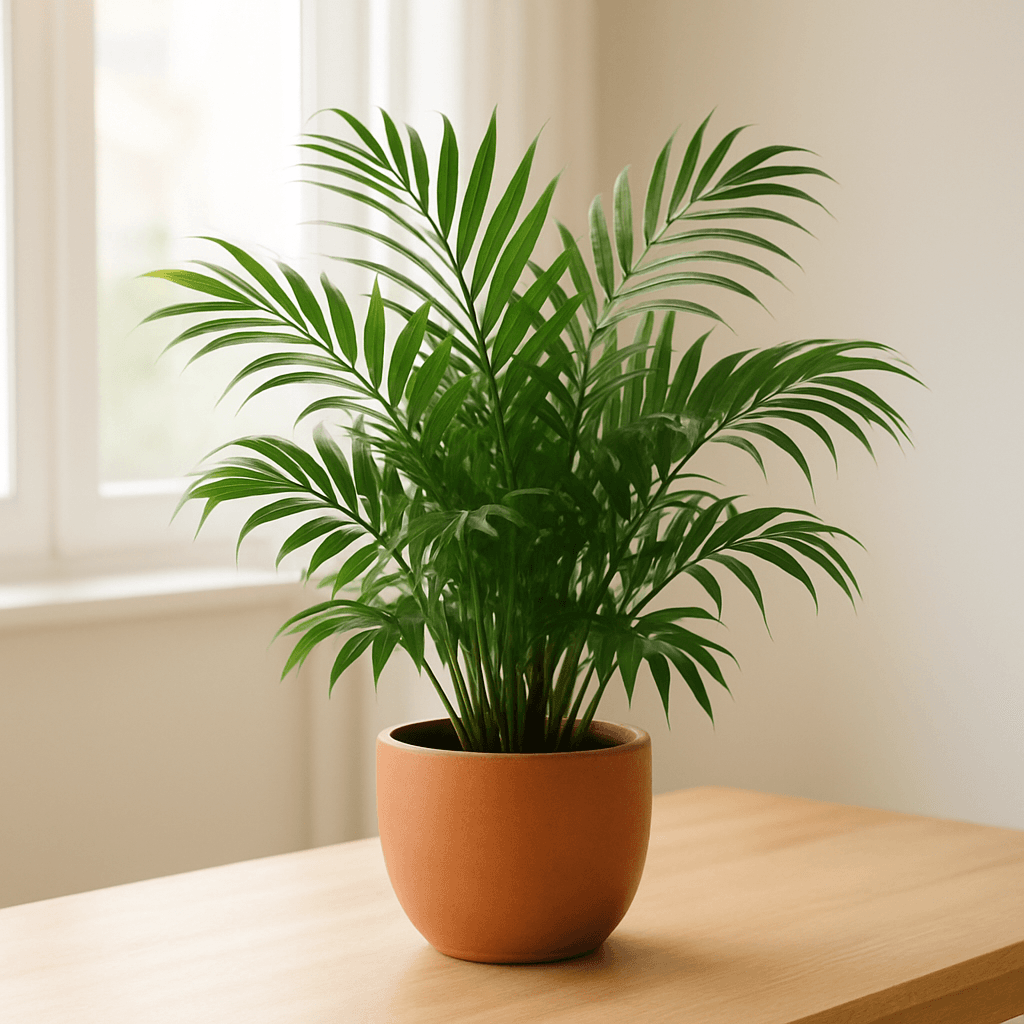
Parlor Palm vs Kentia Palm: Best Indoor Palm?
Parlor palm and kentia palm are the two most commonly sold indoor palms, and both survive in conditions that kill most other palms. Parlor palm stays small and handles lower light. Kentia palm grows taller, has a more elegant silhouette, and tolerates neglect admirably once established. Your choice depends mostly on how much space and light you're working with.

Parlor Palm vs Kentia Palm: Quick Comparison
Both are slow-growing palms that suit indoor conditions far better than most tropical palms on the market.
Parlor palm (Chamaedorea elegans): low to medium indirect light, water every 1–2 weeks, easy difficulty, medium humidity (40–60%), stays under 4 feet indoors, non-toxic to pets.
Kentia palm (Howea forsteriana): medium to bright indirect light, water every 1–2 weeks, moderate difficulty, medium humidity (40–60%), can reach 10 feet indoors over time, non-toxic to pets.
Both are pet-safe, which puts them in a smaller category of genuinely non-toxic large houseplants.
Parlor Palm: Overview
Parlor palm (Chamaedorea elegans) is one of the most low-light-tolerant palms available. It grows in a compact clump of fine-textured fronds and rarely exceeds 3–4 feet indoors. That modest size makes it workable in apartments, offices, or rooms where a larger palm would feel overwhelming.
Water every 1–2 weeks in summer when the top inch of soil is dry, and every 2–3 weeks in winter. Overwatering causes yellowing fronds and root rot, the classic palm mistake. It tolerates medium humidity (40–60%) and standard home temperatures of 65–75°F. Avoid cold draughts near windows in winter.
Non-toxic to cats and dogs (ASPCA), which makes it a rare and genuinely useful option for pet households looking for a statement plant.
Kentia Palm: Overview
Kentia palm (Howea forsteriana) is a more imposing plant. Given years and decent light, it grows tall and arching, with long graceful fronds that drape elegantly. It's been a popular indoor palm since the Victorian era for good reason; it tolerates low humidity, moderate light, and occasional neglect better than most large palms.
Water every 1–2 weeks in summer when the top inch or two of soil is dry, and less frequently in winter. It's drought-tolerant once established. Medium humidity suits it fine. Kentia palm prefers medium to bright indirect light; it tolerates lower light but grows much more slowly. Slow is already the baseline: even in ideal conditions, kentia palm adds only 6–10 inches per year.
Non-toxic to cats and dogs (ASPCA). One of the few genuinely pet-safe large statement plants.
Key Differences That Matter
Size is the most significant difference. Parlor palm stays compact and suited to smaller spaces. Kentia palm grows tall over time and eventually needs a large room to look right. Don't buy a kentia palm for a small flat expecting it to stay manageable; it won't.
Light requirements differ. Parlor palm handles genuinely low light, which makes it useful in rooms where most other plants would struggle. Kentia palm tolerates low light but performs much better in medium to bright indirect light and stays denser and healthier with more.
Growth rate is slow for both, but kentia is slightly faster once established in good light. Both are frustrating if you want quick results.
Both are non-toxic. For pet owners who want a large, dramatic plant, this is a meaningful advantage over most other options.
Which One Should You Pick?
Choose parlor palm for smaller spaces, dim rooms, or if you want a palm that stays manageable. It's one of the easiest palms to keep indoors and works in a wider range of conditions.
Choose kentia palm if you have space for a tall, elegant plant and can offer it medium to bright indirect light. It's an investment plant; it takes years to reach its full potential, but in the right room it's genuinely striking.
For pet households: both are non-toxic, which puts them in a category of large houseplants that's worth knowing about.
The Bottom Line
Parlor palm is the easier, more adaptable choice for smaller spaces and dim rooms. Kentia palm is for people with space, patience, and decent light who want something genuinely elegant. Both are pet-safe, which narrows the field considerably when you're shopping for large statement plants.
Frequently Asked Questions
Is parlor palm or kentia palm easier to care for?▾
Parlor palm is easier. It tolerates lower light, stays small enough to reposition easily, and is more forgiving of inconsistent watering. Kentia palm isn't difficult, but it's slower-growing and more particular about light. Once established in a good spot, kentia is low-maintenance; getting it to that point takes patience.
Can both survive in low light?▾
Parlor palm is one of the best low-light palms available and genuinely thrives in dim conditions. Kentia palm tolerates low light but grows extremely slowly and may decline over time without adequate light. For a dim room, parlor palm is the better choice.
Which is safer for pets?▾
Both are non-toxic to cats and dogs (ASPCA). This makes them two of the few large houseplants that are genuinely safe for pet households. Spider plant and Boston fern are other safe options, but neither achieves the scale of a kentia palm.
What's the ideal humidity for each?▾
Both palms prefer medium humidity around 40–60%, which most homes already provide. Brown frond tips are the sign that air is too dry; this is common in homes with forced-air heating in winter. Moving either palm away from heating vents and increasing nearby moisture helps.