Parlor Palm Care Guide
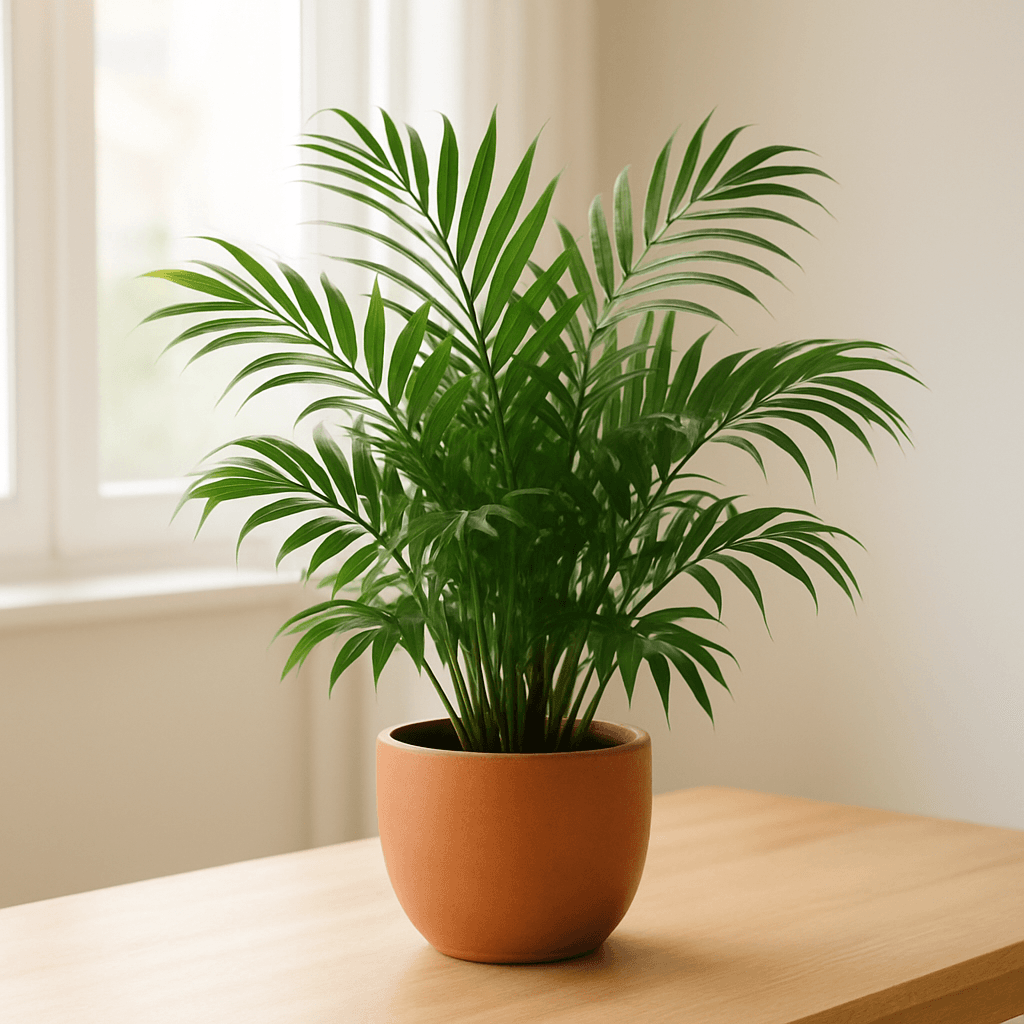
Chamaedorea elegans
Quick Answer
Parlor palm is one of the most adaptable indoor palms available — it handles lower light better than almost any other palm and doesn't need much fuss. The main killer is overwatering: let the top inch of soil dry out before watering, and make sure the pot drains freely. Brown tips on the frond tips are almost always a fluoride or salt issue from tap water, not a care failure.
⭐Difficulty
Easy
☀️Light
Low to medium indirect
💧Watering
Every 1–2 weeks
🌫️Humidity
Medium (40–60%)
🌡️Temperature
60–85°F
📈Growth Rate
Slow
Toxicity
Source: ASPCA Animal Poison Control
Watering
Summer
Every 1–2 weeks
Winter
Every 2–3 weeks
Method: Allow top inch to dry between waterings
In summer, water parlor palm approximately every 1–2 weeks; in winter cut back to every 2–3 weeks. Rather than following a calendar, allow the top inch to dry between waterings. Water thoroughly until it drains from the bottom, then don't water again until the soil passes the dryness check. Use filtered or distilled water if brown tips are appearing — tap water fluoride is a common cause. Yellow fronds often signal overwatering; drooping with dry soil means it needs water now.
Light Requirements
Low to medium indirect
Parlor palm does best near an east- or north-facing window out of direct midday sun. It adapts well to lower light — making it one of the better palm choices for dim offices or interior rooms. Avoid harsh afternoon sun, which can scorch the fronds. A simple LED grow light on a 12-hour timer is a reliable supplement in rooms with little natural light.
Soil & Potting
Soil: Well-draining potting mix with perlite
Pot: Any pot with drainage
Temperature & Humidity
Temperature: 60–85°F (16–29°C)
Humidity: Medium (40–60%)
Fertilizing
Frequency: Monthly spring/summer; skip winter
Type: Balanced palm fertilizer, half strength
Common Problems
Brown tips
Brown tips → Low humidity or fluoride. Use filtered water. This is the most common parlor palm complaint. Switch to filtered or distilled water and raise local humidity with a pebble tray or humidifier. Existing brown tips won't green up — trim them at an angle with clean scissors to match the frond shape — but new growth will come in cleanly once water quality improves.
Yellow fronds
Yellow fronds → Overwatering. Reduce frequency. Catching the problem early makes it much easier to fix than waiting until the plant is in serious distress. Check the soil — if it's wet, hold off entirely until it dries out. If roots look brown and mushy, unpot, trim affected roots, and repot in fresh well-draining mix.
Leaf drop
Leaf drop → Cold drafts or low temperature. Parlor palm is sensitive to temperatures below 50°F and to cold air from drafts, air conditioning vents, or cold windowsills in winter. Move it to a warmer, draft-free location. New growth will resume once conditions stabilise.
Spider mites (common)
Spider mites are parlor palm's most common pest problem — check the undersides of fronds regularly and act early. Look for tiny moving dots, fine webbing, and stippled or yellowing frond texture. Treat with insecticidal soap or neem oil, covering the undersides of fronds, and repeat every 5–7 days for three rounds. Raising humidity significantly discourages mite infestations.
Propagation
Parlor palm propagates primarily by seeds, which are very slow and difficult — this is a plant typically purchased rather than home-propagated. Division is possible on mature plants with multiple stems growing from the same root mass. At repotting time, separate stems carefully ensuring each has an intact root system, then pot individually. The common mistake: trying to propagate from cuttings — parlor palm cannot root from stem or frond cuttings; it needs seeds or division.
Seasonal Care Calendar
🌸 Spring
Spring is when parlor palm starts actively pushing new growth. Increase watering frequency as the plant becomes more active, begin fertilising every 2–4 weeks with a palm-specific or balanced liquid fertiliser, and this is the ideal window for repotting if root-bound.
☀️ Summer
Summer is peak growing season. Water more frequently but check the soil rather than going on a fixed schedule. Inspect fronds regularly for spider mites, which proliferate in warm, dry conditions. Keep away from air conditioning vents which dry the air and create temperature extremes.
🍂 Fall
Fall is a transition: parlor palm grows more slowly as light levels decrease. Reduce watering frequency slightly, stop fertilising by late October, and move it closer to a window to compensate for shorter days. Avoid drafts from opening windows as temperatures drop.
❄️ Winter
In winter, parlor palm enters a slower-growth phase. Water less frequently and ensure it's not sitting in a cold draft near a window or exterior door. Heated indoor air is very dry — a pebble tray or humidifier keeps the fronds from browning at the tips.