Pothos vs Scindapsus Pictus: Spot the Difference
Scindapsus pictus gets sold as a type of pothos constantly, and it's easy to see why; both trail, both tolerate neglect, and the leaves are roughly the same shape. Scindapsus is slower-growing, needs more light to show off its silver markings, and dries out faster. Worth knowing before you bring one home expecting pothos-level toughness.
Pothos vs Scindapsus Pictus: Quick Comparison
Both are trailing aroids that handle moderate neglect well, but they're different plants with different strengths.
Pothos (Epipremnum aureum): low to bright indirect light, water every 1–2 weeks, easy difficulty, low-medium humidity (40–60%), tolerates dim rooms.
Scindapsus pictus: medium to bright indirect light, water every 1–2 weeks (dries out faster), moderate difficulty, medium humidity (50–60%), needs more light to show its markings.
The biggest practical difference: scindapsus is slower and fussier about light than pothos. In low light, its silver satin markings fade and growth nearly stops.
Pothos: Overview
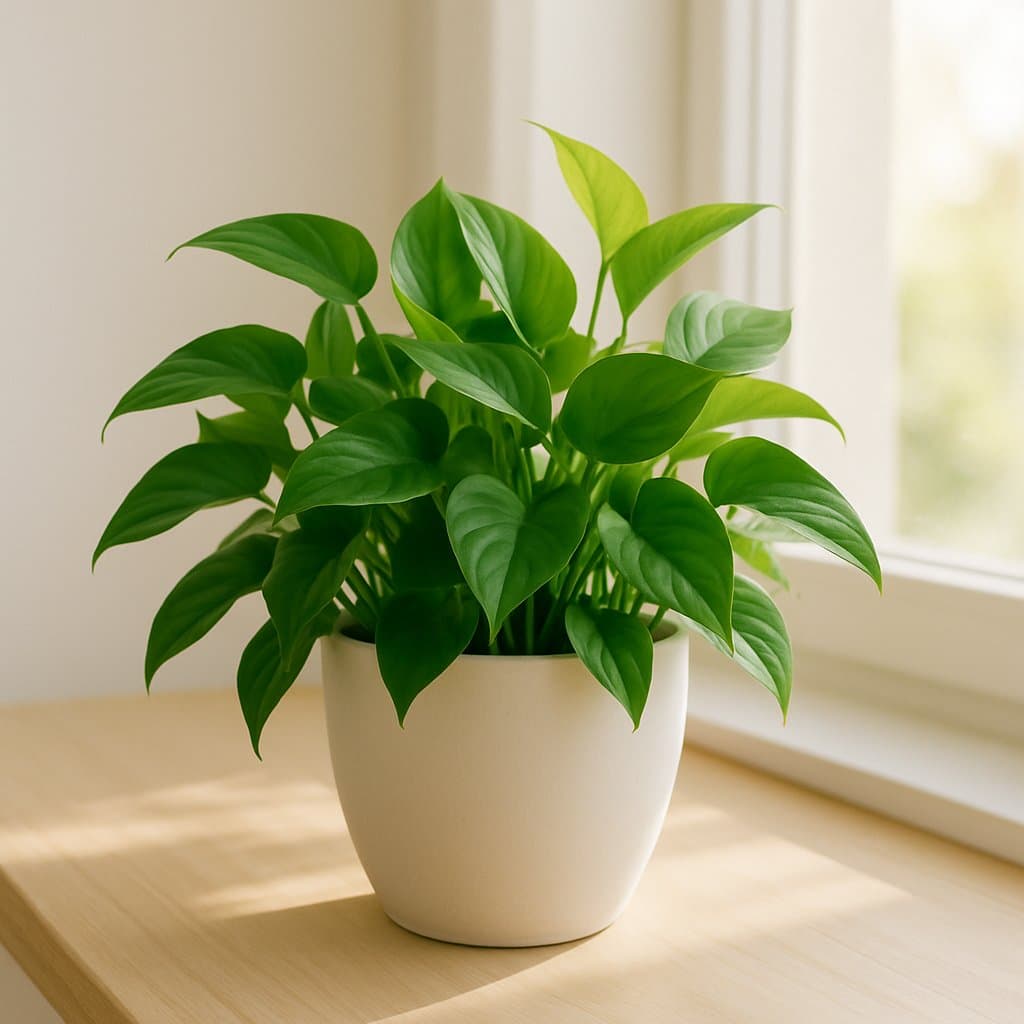
Pothos (Epipremnum aureum) is one of the most adaptable houseplants sold. It grows in low to bright indirect light, tolerates dry air, and keeps trailing even when watering is irregular. Indoors, it trails to 6–10 feet and propagates effortlessly from cuttings in water.
Water every 1–2 weeks in summer when the top inch of soil is dry, and every 2–3 weeks in winter. Overwatering is the main risk; yellowing leaves are the early warning sign. Low-medium humidity (40–60%) suits it fine, and it's comfortable at the 65–75°F range typical of most homes.
Toxic to cats and dogs. Multiple cultivars are available: golden, neon, marble queen, n'joy, and more.
Scindapsus Pictus: Overview
Scindapsus pictus (satin pothos or silver pothos) has matte, slightly velvety leaves patterned with irregular silver splotches. The texture and colouring are distinctive; no other common trailing plant looks quite like it. Grows slower than pothos and stays more compact.
Water when the top inch of soil is dry, similar to pothos, but scindapsus dries out faster and is slightly less tolerant of prolonged drought. Medium humidity (50–60%) keeps the leaves from developing crispy edges. Bright indirect light brings out the silver markings; in low light, the silver fades and the plant barely grows.
Generally considered toxic to pets, though less studied than pothos. Keep it away from cats and dogs as a precaution. Temperature range of 65–75°F suits it well.
Key Differences That Matter
Light is the main separator. Pothos actively grows in dim conditions; scindapsus needs medium to bright indirect light to thrive and look its best. The silver satin markings that make scindapsus worth buying fade noticeably in low light.
Growth speed also differs. Pothos is a fast grower that cascades and trails quickly. Scindapsus is slower and more restrained, which suits smaller spaces but means you won't get the same cascading trailing effect quickly.
Drought tolerance tilts toward pothos. Scindapsus handles dry spells less well and shows stress sooner. Both dislike soggy soil, so well-draining mix matters for both.
In practice, scindapsus isn't hard to keep. It's just more particular than pothos about light and slightly less forgiving about water.
Which One Should You Pick?
Choose pothos if low light, inconsistent watering, or ease above all else is what you need. It's one of the most dependable houseplants you can own.
Choose scindapsus pictus if you have medium to bright indirect light and want something with genuinely unusual texture and patterning. The silver markings on a healthy scindapsus are unlike anything else in the typical houseplant range.
If someone sold you scindapsus as a "silver pothos" and it's struggling in a dim corner, moving it to a brighter spot is the first fix to try.
The Bottom Line
Pothos is tougher, faster, and more adaptable. Scindapsus pictus is slower and needs more light, but the silver satin markings are genuinely striking. If your light is good, scindapsus is worth it. If it's not, get pothos.
Frequently Asked Questions
Is pothos or scindapsus pictus easier to care for?▾
Pothos is easier. It handles a wider range of light levels, is more drought-tolerant, and grows faster, which means it signals stress more visibly and recovers more quickly. Scindapsus is manageable but needs better light and slightly more consistent watering to stay happy.
Can both survive in low light?▾
Pothos genuinely tolerates low light and will grow, slowly, in dim conditions. Scindapsus doesn't handle low light well; growth nearly stops and the silver markings fade. For dim rooms, pothos is the right call.
Which is safer for pets?▾
Neither is safe. Pothos is well-documented as toxic to cats and dogs (ASPCA). Scindapsus is in the same plant family and is generally considered toxic as well, though it's less studied. Keep both away from pets that chew on plants.
What's the ideal humidity for each?▾
Pothos tolerates 40–60% humidity comfortably, covering most homes. Scindapsus prefers 50–60% and gets crispy leaf edges in very dry air. Neither needs a humidifier in a typical home, but scindapsus appreciates one more during dry winter months.