Nerve Plant Care Guide
Fittonia albivenis
Quick Answer
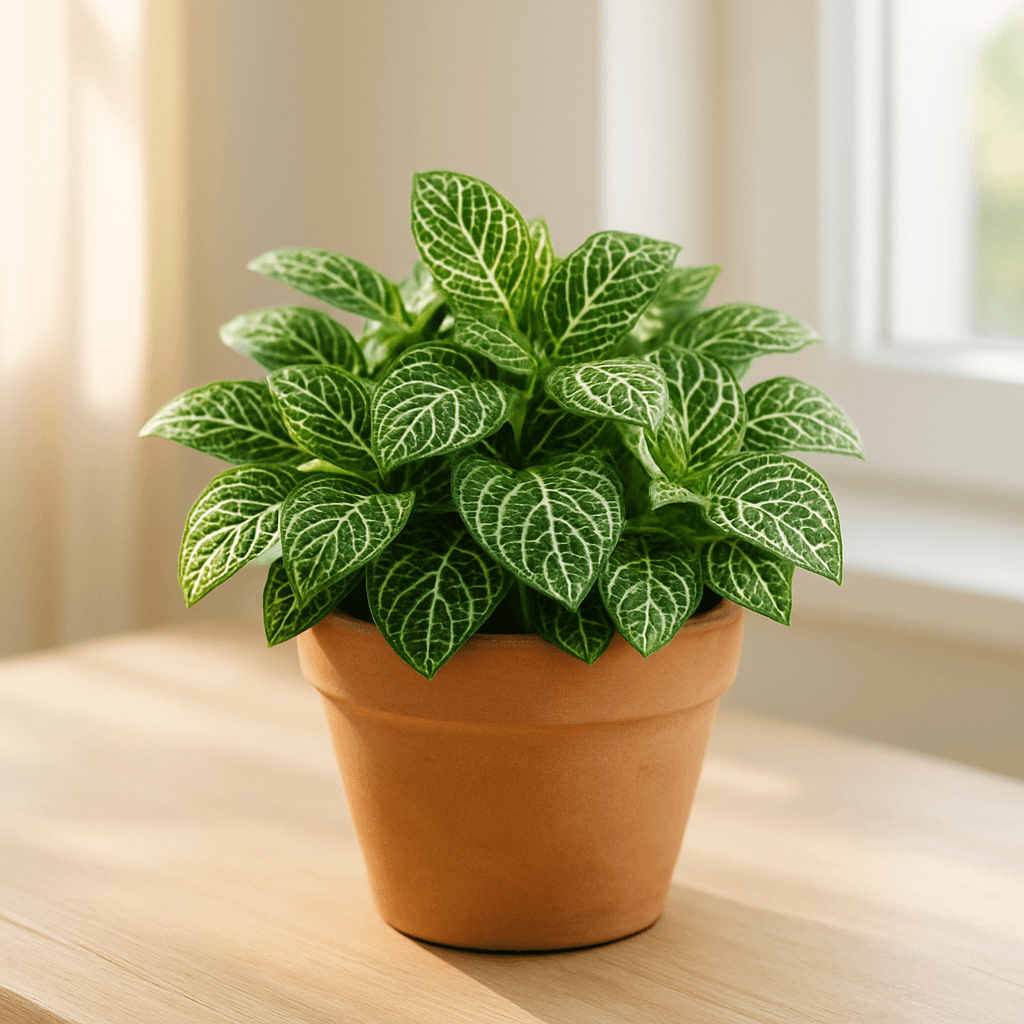
The number one mistake people make with nerve plants is letting the soil dry out. Even slight dehydration sends them into a full, dramatic collapse — and while they bounce back fast when watered, repeated wilting cycles gradually weaken the plant. Keep the soil consistently moist and humidity high, and this plant will reward you with some of the most striking foliage you can grow indoors.
⭐Difficulty
Moderate
☀️Light
Low to medium indirect
💧Watering
Every 3–4 days
🌫️Humidity
High (60–80%)
🌡️Temperature
60–75°F
📈Growth Rate
Moderate
Toxicity
Source: ASPCA Animal Poison Control
Watering
Summer
Every 3–4 days
Winter
Every 5–7 days
Method: Keep consistently moist; very sensitive to drought
Nerve plants don't forgive drought. The goal is consistently moist soil — not soggy, but never dry. In spring and summer, you'll likely be watering every 3–4 days. In winter, stretch that to every 5–7 days, but check the soil rather than going strictly by the calendar, because indoor heating can dry things out faster than you'd expect. Bottom-watering works well here. Set the pot in a shallow dish of water for 20–30 minutes, let it soak from the roots up, then drain fully. This keeps moisture even throughout the pot without splashing water on the leaves, which can invite rot in a plant that already loves humidity. Signs you're underwatering: The whole plant goes limp and flat — it looks completely dead. Don't panic. Water it immediately and it should perk up within an hour. Signs you're overwatering: Stems turn soft and brown at the base, and you may see yellowing leaves. If the roots smell off when you unpot it, you're dealing with root rot. Cut away any blackened roots, let the plant air out for an hour, and repot into fresh, well-draining soil.
Light Requirements
Low to medium indirect
Nerve plants are one of the few houseplants that genuinely prefer lower light — a north-facing windowsill or a spot set back 3–4 feet from an east-facing window is ideal. Direct sun or even bright indirect light will bleach and burn those patterned leaves fast, so if you're using a grow light, keep it at least 12 inches away and run it no more than 10–12 hours a day.
Soil & Potting
Soil: Rich, peat-based mix with good drainage
Pot: Small pot; terrariums ideal
Temperature & Humidity
Temperature: 60–75°F (16–24°C)
Humidity: High (60–80%)
Fertilizing
Frequency: Monthly spring/summer
Type: Balanced fertilizer, quarter strength
Common Problems
Dramatic wilting → Underwatering. Responds quickly to water — within an hour.
Rotting stems → Overwatering. Let air out and reduce moisture.
Faded leaf patterns → Too much light. Move to lower light.
Yellowing → Root rot from overwatering.
Propagation
Take a stem cutting 2–3 inches long with at least two sets of leaves, and snip it just below a leaf node — that's where the roots will emerge. You can root it in a small glass of water placed somewhere warm and bright (not direct sun), or push it directly into moist potting mix and cover it with a clear plastic bag or a cut bottle to hold humidity. Roots typically appear in 2–3 weeks. The thing that trips most people up: keeping the cutting moist enough during rooting. Fittonia cuttings wilt almost immediately if the humidity drops, which makes people think they've failed when they haven't. If you're rooting in soil, that humidity tent isn't optional — it's what keeps the cutting alive long enough to develop roots. Once you see new leaf growth, the roots are established and you can gradually open up the cover over a few days.
Seasonal Care Calendar
🌸 Spring
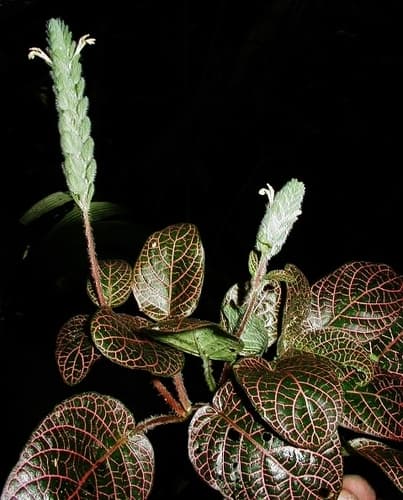
Resume consistent watering. Pinch off any flower spikes to keep foliage dense.
☀️ Summer
Maintain high humidity. Water frequently. Terrariums help through hot, dry summer.
🍂 Fall
Maintain consistent moisture. Watch for gnats which are attracted to the moist soil.
❄️ Winter
Reduce watering very slightly. Keep humidity high — indoor heating is the main enemy.