Calathea Care Guide
Calathea orbifolia
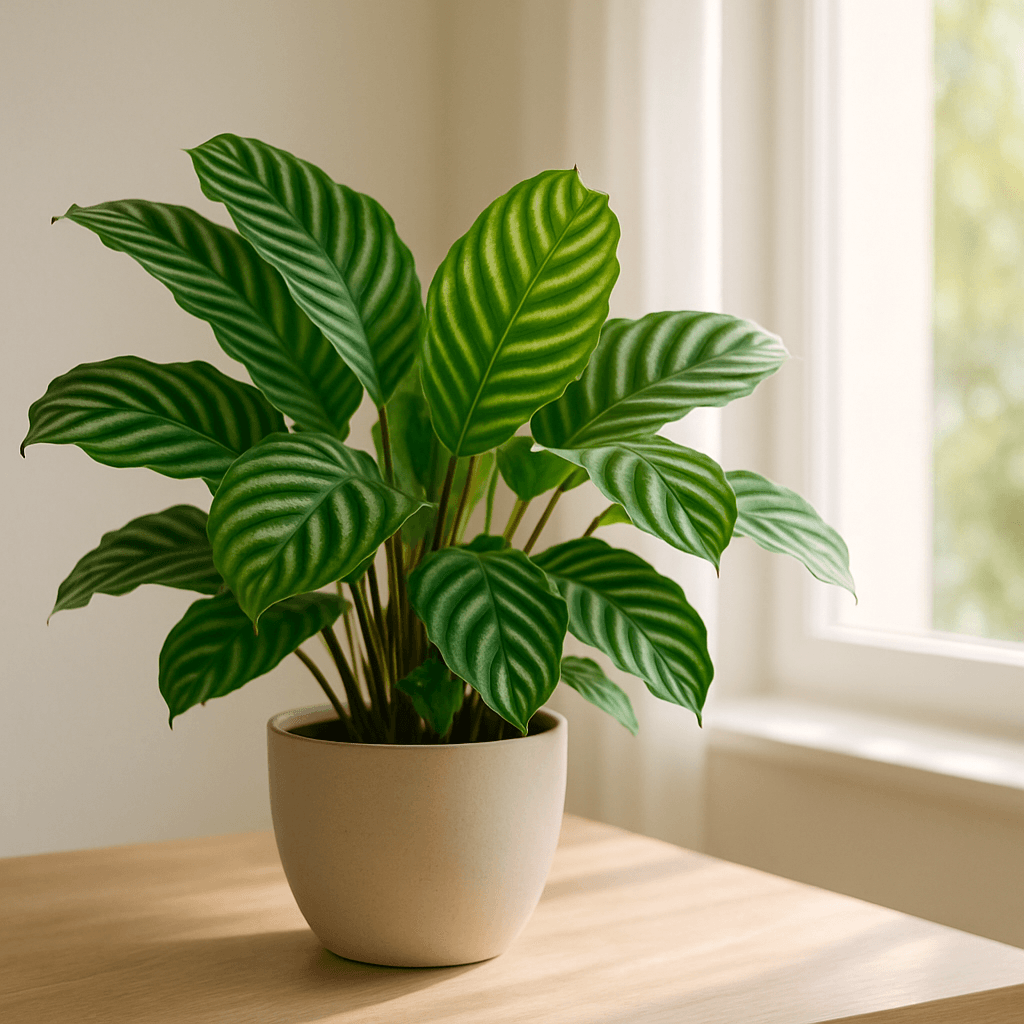
Quick Answer
The single thing that kills most Calatheas isn't neglect — it's tap water. Chlorine and fluoride build up in the soil and scorch the leaf edges brown, and once that damage appears, it won't reverse. Switch to distilled or rainwater from day one, pair it with a humidifier, and this plant becomes significantly easier to keep alive.
⭐Difficulty
Moderate–Hard
☀️Light
Low to medium indirect
💧Watering
Every 1 week
🌫️Humidity
High (60%+)
🌡️Temperature
60–80°F
📈Growth Rate
Slow
Toxicity
Source: ASPCA Animal Poison Control
Watering
Summer
Every 1 week
Winter
Every 1–2 weeks
Method: Keep evenly moist; distilled or rainwater preferred
Water your Calathea orbifolia every 7 days in spring and summer, pulling back to every 10–14 days in winter when growth slows. The goal is evenly moist soil — never bone dry, never waterlogged. Stick your finger an inch into the soil; if it still feels damp, wait another day or two. Water quality is non-negotiable here. Always use distilled water, collected rainwater, or water that's been filtered through a reverse osmosis system. Tap water — even if it smells fine — carries chlorine and fluoride that accumulate in the soil and burn the leaf margins over time. If you've been using tap water and see crispy brown edges, flush the pot thoroughly with distilled water, then don't go back. For method, bottom-watering works well: set the pot in a tray of distilled water for 30–45 minutes, let the soil drink from below, then drain fully. This avoids getting water in the crown and encourages roots to grow downward. Signs of overwatering: yellowing lower leaves, soggy soil that stays wet for more than 10 days, mushy stems at the base. Signs of underwatering: leaves curling inward, dry soil pulling away from the pot edges, drooping foliage.
Light Requirements
Low to medium indirect
Calathea orbifolia wants low to medium indirect light — think bright shade, not a sunny windowsill. A spot 3–4 feet back from an east or north-facing window is ideal; direct sun will bleach or scorch the leaves fast. If your home is genuinely dark, a full-spectrum grow light on a 12-hour timer will keep the foliage looking sharp through winter.
Soil & Potting
Soil: Peat-free potting mix, moisture-retentive but well-draining
Pot: Plastic or glazed ceramic pot
Temperature & Humidity
Temperature: 60–80°F (16–27°C)
Humidity: High (60%+)
Fertilizing
Frequency: Monthly spring/summer; very light dose
Type: Balanced liquid, quarter strength
Common Problems
Brown, Crispy Leaf Edges The leaves develop dry brown margins — sometimes just a thin line, sometimes half the leaf. This is almost always tap water minerals or low humidity, and often both at once. Stop using tap water immediately, switch to distilled or rainwater, and move the plant closer to a humidifier. The existing damage won't heal, but new leaves should come in clean within a few weeks.
Propagation
Calathea orbifolia can only be propagated by division — cuttings simply won't root, which surprises a lot of people used to propagating easier plants. The best time to divide is in spring when you're already repotting. Gently remove the plant from its pot, shake off the excess soil, and look for natural clumps where separate stems emerge from their own root sections — those are your divisions. Pull or tease those clumps apart carefully by hand; if roots are tangled, use clean scissors to separate them rather than yanking. Each division needs a good chunk of roots attached to survive, so don't be tempted to split the plant into too many pieces. Pot each division into a small pot with fresh soil, water with distilled water, and keep the humidity high for the first few weeks while the roots reestablish — this is the stage where most divisions fail, not from disease, but from being allowed to dry out too quickly before they've settled in.
Seasonal Care Calendar
🌸 Spring
The plant starts pushing new growth as days get longer, which means it needs more water and can handle its first light feeding. Start monthly fertilizing at quarter strength with a balanced liquid fertilizer, and keep using distilled or rainwater — spring tap water often contains higher chemical levels after winter treatment. Watch for new leaves unfurling; if they come in healthy and patterned, your care routine is working.
☀️ Summer
This is when Calathea is most demanding. Warm indoor air combined with air conditioning creates the worst possible humidity conditions, so run your humidifier consistently and check the soil every 5–6 days rather than waiting a full week. If you have a shaded outdoor spot that stays out of direct sun, this is the one season where brief stints outside in humid air can genuinely benefit the plant.
🍂 Fall
Growth slows as light levels drop, so pull back on fertilizing after September and let the soil dry slightly longer between waterings. Indoor heating systems start kicking on in fall, and that dry forced air is brutal for Calathea — spider mites love those conditions, so check the undersides of leaves weekly. Catch a mite infestation early and it's easy to deal with; let it go and you'll be fighting it all winter.
❄️ Winter
Stop fertilizing entirely and water every 10–14 days, but don't let the plant dry out completely. The humidifier becomes your most important tool — cold air holds very little moisture, and heating strips what's left. Keep using only filtered or distilled water all winter; cold tap water also shocks the roots, so if you must use it, at least let it sit overnight to come to room temperature first.