Orchid (Phalaenopsis) Care Guide
Phalaenopsis spp.
Quick Answer
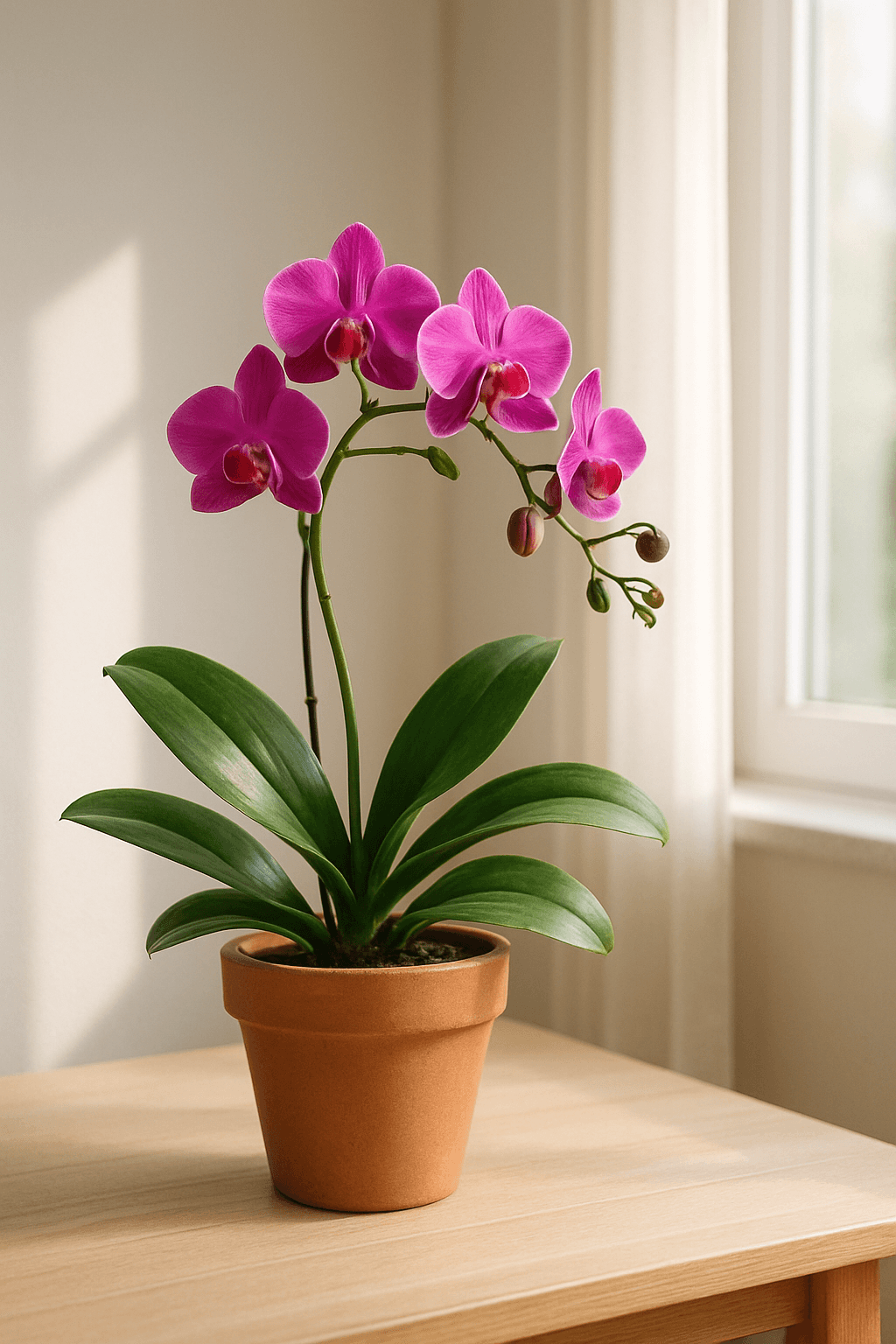
Most people kill their orchid by watering on a schedule instead of checking what the plant actually needs — look at the roots through the clear pot, and only water when they turn silver-grey. Get the watering right, give it bright indirect light near an east or west window, and a Phalaenopsis is genuinely one of the more forgiving houseplants you can own. The fussy reputation is mostly undeserved.
⭐Difficulty
Moderate
☀️Light
Bright indirect
💧Watering
Every 1 week
🌫️Humidity
Medium–High (50–70%)
🌡️Temperature
60–85°F
📈Growth Rate
Slow
Toxicity
Source: ASPCA Animal Poison Control
Watering
Summer
Every 1 week
Winter
Every 1–2 weeks
Method: Water in sink, allow to drain fully; never let sit in water
This is where most people go wrong, so pay attention here. Forget the calendar. Don't water on a fixed schedule. Instead, look at the roots through the clear plastic nursery pot. When they're plump and green, the plant has moisture. When they fade to silver-grey or white and feel papery, it's time to water. In summer that usually works out to about once a week. In winter, every 10–14 days is more typical — but the roots tell you the truth, not the date. How to water: Take the plastic nursery pot to the sink and run room-temperature water slowly over the bark for about 30 seconds, letting it flow all the way through the drainage holes. Let it drain completely — at least 5 minutes — before dropping it back into its decorative outer pot. Never let the nursery pot sit in standing water. Root rot is the fastest way to lose a Phalaenopsis, and it almost always comes from water pooling at the bottom. Signs you're overwatering: Roots look brown and mushy rather than white or grey. Leaves may yellow from the bottom up. Signs you're underwatering: Leaves look slightly wrinkled or feel softer than usual. Roots are bone-white and shriveled rather than just dry.
Light Requirements
Bright indirect
Phalaenopsis want bright indirect light — an east-facing windowsill is ideal, or 2–3 feet back from a west window where the afternoon sun won't scorch the leaves. If your plant sits more than 5 feet from any window and hasn't rebloomed in over a year, a grow light positioned 12 inches above the foliage for 12 hours a day will make a real difference, especially in winter when natural light drops off.
Soil & Potting
Soil: Orchid bark mix; must be very well draining
Pot: Clear plastic nursery pot inside decorative pot
Temperature & Humidity
Temperature: 60–85°F (16–29°C)
Humidity: Medium–High (50–70%)
Fertilizing
Frequency: Every 2 weeks spring/summer; skip winter
Type: Orchid-specific fertilizer (20-20-20), quarter strength
Common Problems
No rebloom → Cut spike above node; reduce temp by 10°F at night for 2 weeks.
Yellow leaves → Overwatering or too much direct sun.
Wrinkled leaves → Underwatering or root rot.
Roots turning grey/white → Normal when dry. Green when watered.
Propagation
Phalaenopsis can't be propagated from cuttings the way most houseplants can — the main way to get a new plant is to wait for a keiki, which is a baby plantlet that sometimes sprouts from a node on the flower spike. Once the keiki has at least two or three leaves and its own roots that are 2–3 inches long, you can separate it. Gently twist it free from the mother spike (or cut it with a sterilized blade), pot it in a small container with fresh orchid bark, and treat it like a mature plant from day one. The thing that trips people up: detaching the keiki too early. It's tempting to pull it off when it looks like a plant, but if the roots are still short stubs, it won't survive on its own. Wait until those roots are clearly a few inches long and look healthy — it takes patience, usually several months from when the keiki first appears. Division is the other option, but only at repotting time if your plant has grown into a true multi-stem clump, which is relatively uncommon with Phalaenopsis.
Seasonal Care Calendar
🌸 Spring
Resume fertilizing every 2 weeks. This is the best time to repot after blooming.
☀️ Summer
Maintain consistent watering. Protect from hot, direct sun which burns leaves.
🍂 Fall
Reduce fertilizing. The natural temperature drop at night encourages bloom spike formation.
❄️ Winter
Provide a 10°F nighttime temperature drop to trigger bloom spikes. Reduce watering slightly.