Succulent Mix Care Guide
Various spp.

Quick Answer
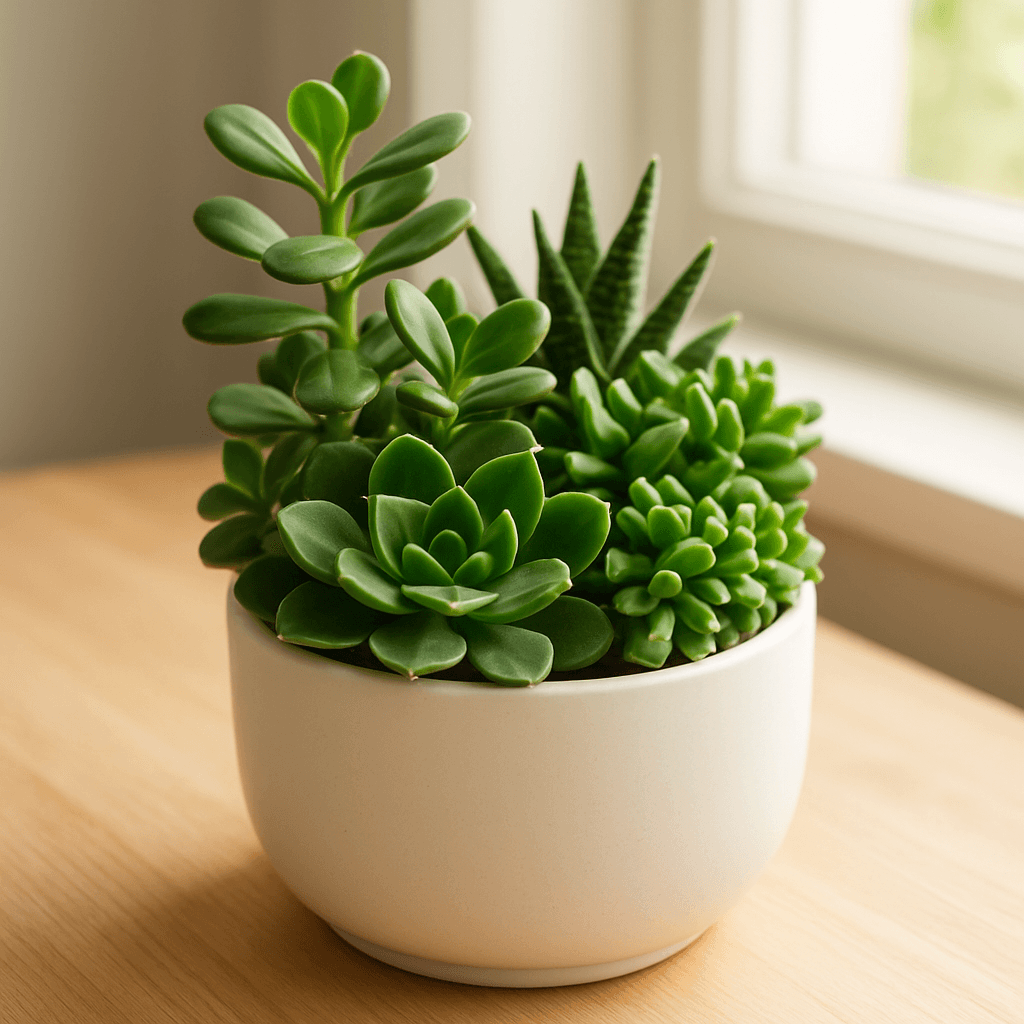
The number one mistake with succulents is overwatering — and the number two mistake is not enough light. Succulents store water in their leaves or stems and prefer to dry out completely between waterings. Indoors, they need the brightest spot you have (a south-facing windowsill with direct sun) or a grow light positioned close. In regular potting soil or low light, they stretch, rot, or slowly decline.
⭐Difficulty
Easy
☀️Light
Bright indirect to direct
💧Watering
Every 2–3 weeks
🌫️Humidity
Low (20–40%)
🌡️Temperature
40–90°F
📈Growth Rate
Slow
Toxicity
Source: ASPCA Animal Poison Control
Watering
Summer
Every 2–3 weeks
Winter
Every 4–8 weeks
Method: Allow to dry completely between waterings
In summer, water succulents approximately every 2–3 weeks; in winter cut back to every 4–8 weeks. Rather than following a calendar, let the soil dry out completely — all the way to the bottom of the pot. Water thoroughly until it drains from the bottom, then don't water again until completely dry. Soft or mushy leaves signal overwatering and the early stages of root rot; slight wrinkling or shrivelling means it's time to water.
Light Requirements
Bright indirect to direct
Succulents do best on a south- or west-facing windowsill where they get at least 2–4 hours of direct sun. Without direct light, succulents stretch toward the light source (etiolation), losing their tight, compact shapes. A grow light positioned 6–12 inches above the plants on a 12–14 hour timer is the most reliable indoor solution when sunny windows aren't available.
Soil & Potting
Soil: Succulent/cactus mix with added perlite
Pot: Shallow terracotta pots with drainage holes
Temperature & Humidity
Temperature: 40–90°F (4–32°C)
Humidity: Low (20–40%)
Fertilizing
Frequency: Once in spring
Type: Succulent fertilizer, diluted
Common Problems
Stretching/etiolation
Stretching or etiolation → Insufficient light. Move to brighter spot or outdoors. Once a succulent stretches, those leaves won't compact back — but you can behead the rosette and re-root the compact top section, or allow new compact growth from the base once light improves. A grow light at close range is the most reliable indoor fix.
Mushy leaves
Mushy leaves → Overwatering or root rot. Repot in dry fresh gritty mix. This is the number one way succulents die indoors. Unpot the plant, remove all dark or mushy roots and leaf tissue, let it air-dry for an hour, then repot in dry cactus or succulent mix. Don't water for at least 2 weeks to allow recovery.
Wrinkled leaves
Wrinkled leaves → Underwatering. Water thoroughly. Wrinkling means the plant has used up its stored water reserves. Give it a thorough soak at the base (never into the rosette) and it should plump up within a day or two. In a very gritty mix, dry soil can become temporarily water-repellent — water slowly in a circle around the pot edge if water is running off without absorbing.
Mealybugs in crevices
Mealybugs hide in leaf crevices as white, cottony masses and are one of the most common succulent pests. Treat with isopropyl alcohol (70%) on a cotton swab applied directly to each mealybug, or spray the entire plant with diluted neem oil. Repeat every 5–7 days for three rounds. Isolate affected plants immediately to prevent spread.
Propagation
Most succulents propagate readily by leaf cuttings, offsets (chicks), or stem cuttings. For leaf cuttings: gently twist a healthy leaf off cleanly with the base intact (no tearing), let it callous for 24 hours on a dry surface, then lay on top of dry or barely moist succulent mix. Mist the surface every few days. A small rosette sprouts from the base in 3–8 weeks. For offsets: remove the small "chick" rosettes that form around the mother plant, let the cut end callous for a day, then pot in dry mix. The common mistake with leaf propagation: using leaves that were pulled without the base — those shrivel and die without ever sprouting.
Seasonal Care Calendar
🌸 Spring
Spring is when succulents start actively pushing new growth as day length and light intensity increase. Resume a regular watering schedule after the very minimal winter frequency, begin fertilising once with a diluted cactus fertiliser, and this is the ideal window for repotting, dividing, or taking cuttings. Offsets and chicks separate easily now.
☀️ Summer
Summer is peak growing season — succulents benefit from the most light and warmth available. Water every 2–3 weeks, feed once more in midsummer if growth is strong, and if you can move them outdoors to a sunny spot, growth and colour intensity improve dramatically. Watch for heat stress (outer leaves becoming papery) if temperatures exceed 95°F consistently.
🍂 Fall
As temperatures drop in fall, begin tapering off watering. Succulents will naturally slow their growth rate. Stop fertilising and avoid repotting before winter. The cooler temperatures and shorter days often trigger stunning colour changes in many varieties — reds, purples, and oranges intensify as stress colours emerge.
❄️ Winter
Winter is near-dormancy for most succulents. Water only when the soil has been completely dry for at least a week, which may mean once a month or less. Hold off on fertilising entirely until spring. Maintain the brightest light available. Don't panic if growth stops completely — this rest is essential for long-term plant health.