Monstera vs Swiss Cheese Vine: What's the Difference?
Monstera deliciosa and Monstera adansonii look alike — both develop holes, called fenestrations, in their leaves as they mature — but they grow very differently. Monstera deliciosa reaches 2–8 feet indoors and climbs; it benefits from a moss pole. Swiss cheese vine stays smaller, trails naturally, and suits a hanging basket or shelf. Neither is safe for cats or dogs.
Monstera vs Swiss Cheese Vine: At a Glance
Both are Monstera species with similar care needs, but their size and growth habits make them suit very different spaces.
Monstera deliciosa: bright indirect light, water every 1–2 weeks in summer and every 2–4 weeks in winter, difficulty easy, medium-high humidity (50–60%), toxic to pets, reaches 2–8 feet indoors. Swiss cheese vine (Monstera adansonii): bright indirect light, water every 1–2 weeks in summer and every 2–3 weeks in winter, difficulty easy-to-moderate, medium-high humidity (50–60%), toxic to pets, trails 3–6 feet.
The watering schedules are nearly identical, and both prefer similar conditions. The difference is form: monstera deliciosa is a large, upright statement plant; swiss cheese vine is smaller and more flexible, trailing or climbing depending on what you provide.
Monstera Deliciosa: What You Need to Know
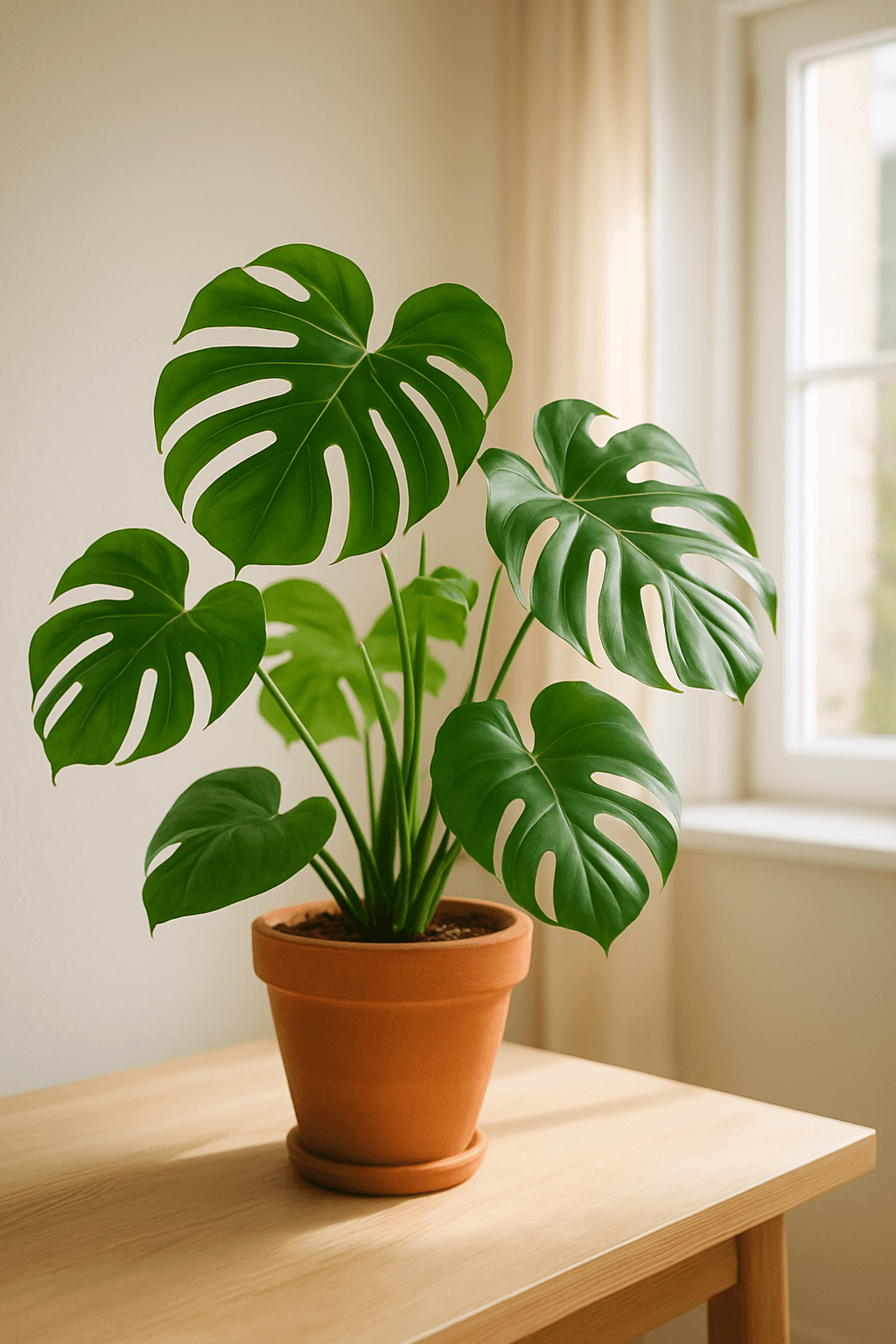
Monstera deliciosa is the iconic large-leaved houseplant with split and holey leaves. The fenestrations only develop in leaves grown in bright enough conditions — plants in low light produce whole, uncut leaves and never develop the trademark look. Move it closer to a bright window and the next leaves will be more fenestrated.
Care is beginner-friendly: water every 1–2 weeks in summer when the top 2 inches dry out, and every 2–4 weeks in winter. Bright indirect light, 50–60% humidity, and standard potting mix with perlite. A moss pole encourages it to climb and produces significantly larger leaves.
Expect a 4–6 foot spread at maturity. Toxic to cats, dogs, and children — calcium oxalate crystals cause oral burning and GI upset (ASPCA).
Swiss Cheese Vine: What You Need to Know
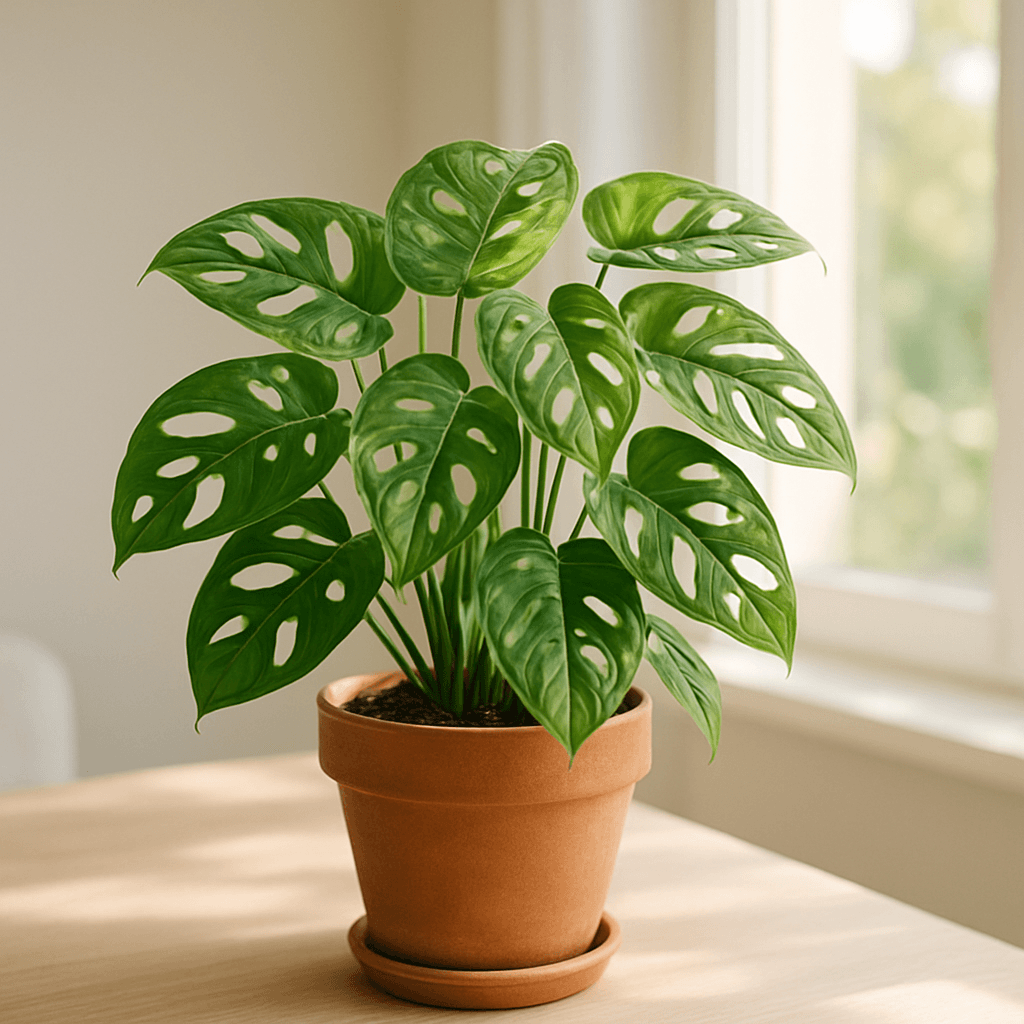
Monstera adansonii produces smaller leaves with more numerous, rounder holes than M. deliciosa. It trails and climbs, reaching 3–6 feet indoors, and fits naturally in a hanging basket or over the edge of a shelf.
Care requirements are close to M. deliciosa but slightly more demanding about humidity. Below 50%, leaf edges turn brown; above 60%, it thrives. Water every 1–2 weeks in summer and every 2–3 weeks in winter, letting the top inch of soil dry out between waterings.
It grows faster than M. deliciosa relative to its size and benefits from annual spring repotting. Propagation from stem cuttings in water is straightforward. Also toxic to cats and dogs (ASPCA).
What Actually Sets Them Apart?
Size is the most practical difference. M. deliciosa becomes a floor plant — a statement piece that dominates a corner. M. adansonii stays compact enough for a shelf, desk, or hanging basket. If space is limited, swiss cheese vine gives you the fenestrated-leaf aesthetic in a much more manageable form.
Leaf shape differs once you look closely. M. deliciosa produces large, paddle-shaped leaves with splits that reach the edge and holes throughout. M. adansonii produces smaller, oval leaves with oval holes but no marginal splits. Both are striking — the split-leaf look is unique to M. deliciosa.
Growth habit: M. deliciosa climbs slowly and benefits from a moss pole. M. adansonii is more flexible — it trails or climbs depending on what you give it. Both are toxic to cats and dogs with nearly identical care needs.
Which Should You Choose?
Choose Monstera deliciosa if you have floor space for a large plant, want the classic split-leaf look, and have a bright spot where it can develop full fenestrations. Add a moss pole and it becomes a genuinely impressive statement piece.
Choose swiss cheese vine if you're working with limited floor space, want a hanging or trailing plant, or prefer something that stays more manageable. It delivers the holey-leaf aesthetic in a form that works on a shelf or in a hanging basket.
If you have cats or dogs: both are off the table. The calcium oxalate crystals in both cause oral irritation (ASPCA). A bird of paradise gives you a large-leaf statement look without the toxicity risk.
The Bottom Line
Monstera deliciosa and swiss cheese vine share the fenestrated leaf look and nearly identical care — the choice comes down to scale. Pick deliciosa for a large floor statement plant; pick adansonii for a trailing or climbing plant that fits a shelf or hanging basket.
Frequently Asked Questions
Why doesn't my monstera have holes in its leaves?▾
Monstera deliciosa only develops fenestrations in leaves grown in sufficient light. Plants in low or medium light produce whole, uncut leaves. Moving the plant to brighter indirect light, close to a window, means the next few leaves will start to show holes. Young plants also produce whole leaves regardless of light — fenestrations develop as the plant matures, typically from the second or third year onward.
Is swiss cheese vine the same as monstera?▾
Swiss cheese vine (Monstera adansonii) is in the same genus as Monstera deliciosa but is a different species. Both develop holes in their leaves (fenestrations), which is why they share the common name — but they differ in leaf size, shape, and growth habit. M. deliciosa grows large and upright; M. adansonii stays smaller and trails or climbs. Both are toxic to pets.
Are monstera and swiss cheese vine safe for pets?▾
Neither is safe for cats or dogs. Both contain calcium oxalate crystals that cause oral irritation, drooling, and GI upset when ingested (ASPCA). If you have pets that chew on plants, skip both and consider a bird of paradise or spider plant instead.
How do I make my monstera grow faster?▾
More light is the most reliable lever. Monstera grows fastest in bright indirect light, close to a window. A moss pole encourages climbing and often produces larger leaves. Fertilise monthly in spring and summer with a balanced liquid fertiliser, and repot once roots start circling the bottom of the pot. Temperature above 65°F year-round keeps growth moving.