Peace Lily vs Calathea: Low-Light Beauties Compared
Peace lily is the easier choice. Spathiphyllum wallisii tolerates low light, signals when it needs water by drooping slightly, and flowers reliably with minimal care. Calathea needs humidity above 60% and filtered water to prevent brown, crispy tips — but it's one of the few striking low-light plants that's completely safe for cats and dogs.

Peace Lily vs Calathea: At a Glance
Both are popular low-light houseplants, but they sit at opposite ends of the care difficulty scale.
Peace lily (Spathiphyllum wallisii): low to medium indirect light, water every week in summer and every 1–2 weeks in winter, difficulty easy, medium-high humidity (50–60%), toxic to pets. Calathea (commonly C. orbifolia or C. lancifolia): low to medium indirect light, water every week in summer and every 1–2 weeks in winter, difficulty moderate-to-hard, high humidity (60%+), pet-safe.
The watering schedules look identical, but calathea is far less forgiving about water quality and humidity. Tap water with fluoride or chlorine causes brown, crispy leaf tips — filtered or rainwater solves it.
Peace Lily: What You Need to Know
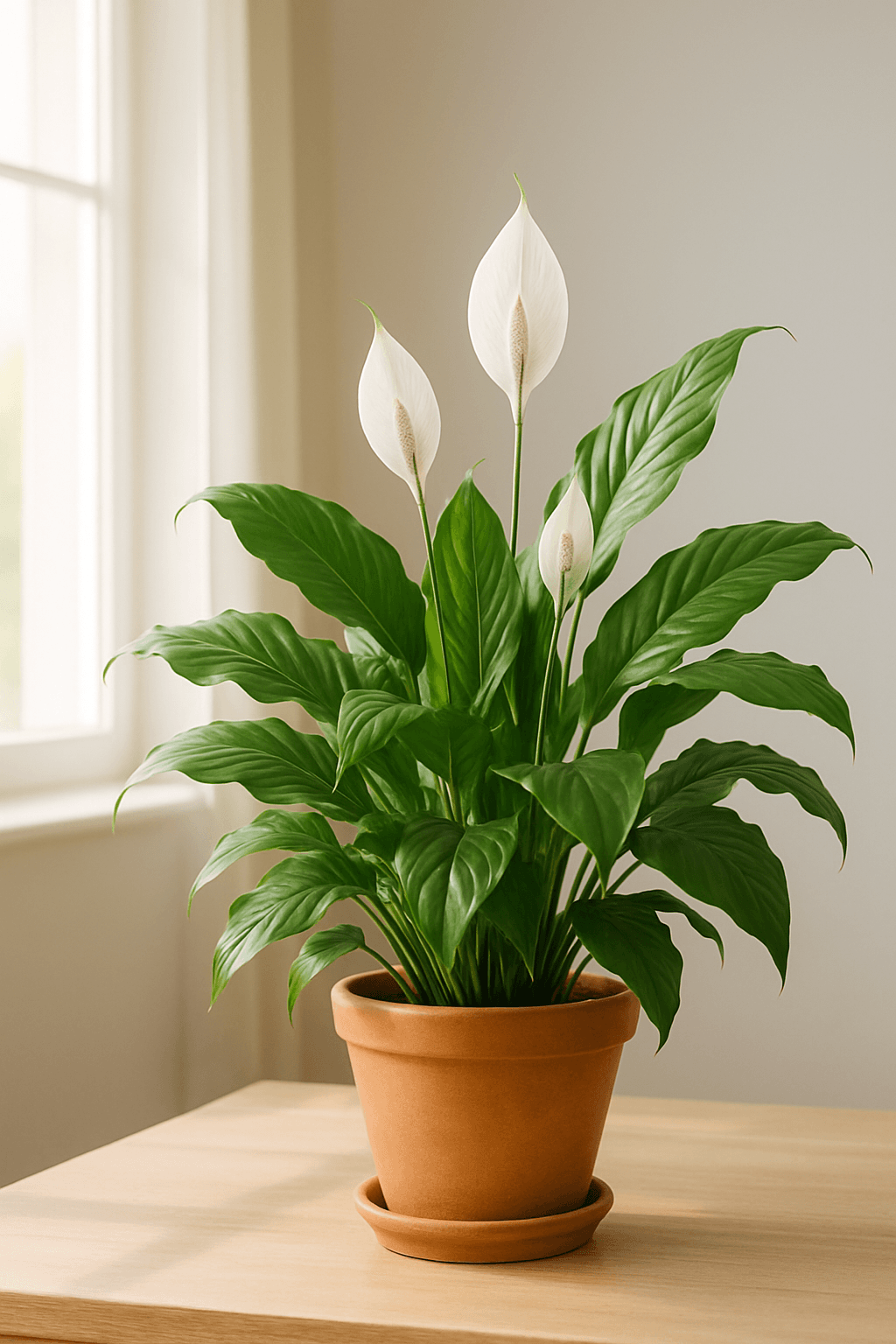
Peace lily is one of the few flowering plants that genuinely tolerates low light. It won't bloom as freely in a dim room, but it stays healthy and keeps its deep green foliage without complaint. Medium indirect light produces the distinctive white spathes more reliably.
Water when the top inch of soil dries out, roughly every week in summer. Peace lily droops visibly when it's thirsty, then perks back up within a few hours of watering — a useful signal for beginners who struggle to read soil moisture.
The downside is toxicity. Peace lily contains calcium oxalate crystals and is toxic to cats, dogs, and children (ASPCA). Not a plant for homes with pets that investigate greenery.
Calathea: What You Need to Know
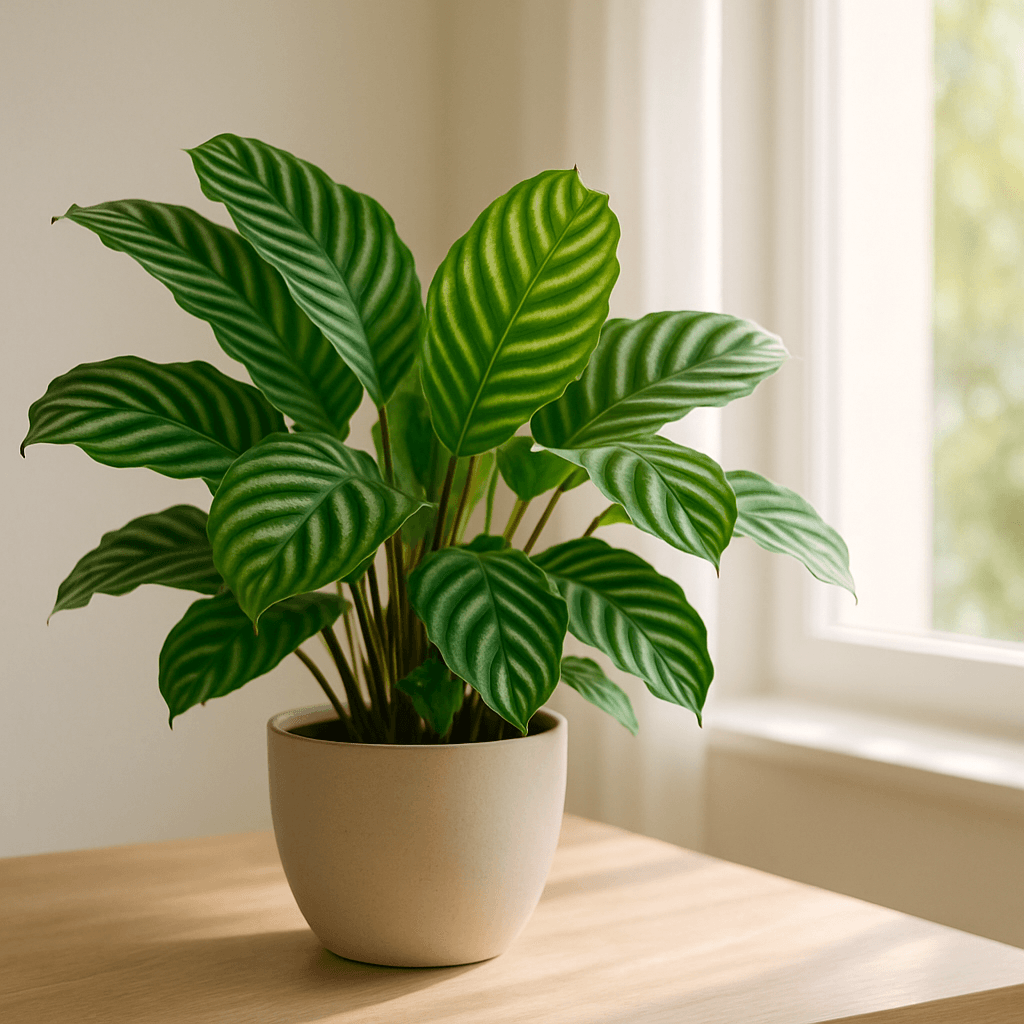
Calathea's appeal is real: dramatically patterned leaves that fold upward at night (nyctinasty), combined with being completely safe for cats and dogs. The care requirements are where it becomes challenging.
Humidity above 60% is non-negotiable for most calathea species. Below that, leaf edges turn brown and crispy and stay that way. A humidifier is the most reliable fix; pebble trays help but rarely maintain 60% in a dry room.
Water quality matters as much as humidity. Fluoride and chlorine in tap water cause tip burn. Use filtered water, rainwater, or tap water left out 24 hours. Water every week in summer when the top inch is damp but not saturated.
For beginners: C. lancifolia (rattlesnake plant) and C. orbifolia are more tolerant than the demanding C. makoyana or white fusion varieties.
What Actually Sets Them Apart?
Pet safety is the clearest dividing line. Calathea is safe for cats and dogs; peace lily is not. If you have pets, that single fact may decide the choice.
Flowering is peace lily's exclusive advantage. Calathea rarely flowers indoors, and the flowers it does produce are small and unremarkable. Peace lily's white spathes appear several times a year in medium light.
Care difficulty is genuinely different. Peace lily's biggest risk is overwatering. Calathea's list includes overwatering, low humidity, tap water, cold drafts, and direct sun — any of which triggers visible damage.
Both prefer temperatures of 60–85°F and dislike direct sun.
Which Should You Choose?
Choose peace lily if you want a flowering low-light plant that's easy to read and forgiving of imperfect conditions. It's an excellent first houseplant and one of the few that reliably blooms in dim spaces.
Choose calathea if you have cats or dogs and want something visually striking. Be honest about your ability to maintain humidity above 60% — if your home is dry, a humidifier is a real investment you'll need to make.
For a middle ground: Maranta leuconeura (prayer plant) is calathea's close relative, pet-safe, and noticeably easier about humidity swings.
The Bottom Line
Peace lily is the easier plant: forgiving, flowering, and communicative when thirsty. Calathea is harder but pet-safe — worth the extra care if you have animals or want dramatic patterned foliage. If calathea feels like too much, try prayer plant as a more forgiving middle ground.
Frequently Asked Questions
Why are my calathea leaves curling?▾
Curling calathea leaves almost always point to low humidity or inconsistent watering. Below 50% humidity, calathea curls its leaves inward to reduce moisture loss. Check your room's humidity with a hygrometer — if it's under 50%, a small humidifier near the plant fixes the problem within days. Underwatering can also cause curling; feel the soil and water if the top inch is dry.
Can I put a peace lily in my bathroom?▾
Yes, bathrooms are often ideal for peace lily. The humidity from showers keeps the air moist, and most bathrooms have at least some indirect light from a window. Peace lily doesn't need much light to stay healthy, making it one of the better bathroom plant choices. Just keep it out of reach if you have pets or children.
Is calathea safe for cats?▾
Calathea is non-toxic and safe for cats and dogs. Peace lily, by contrast, is toxic to both due to calcium oxalate crystals (ASPCA). If pet safety is a priority, calathea is the clear choice between these two plants.
Why does my peace lily have brown tips?▾
Brown tips on peace lily usually mean low humidity, fluoride in tap water, or root stress from overwatering. Switch to filtered or rainwater first — that alone resolves tip browning in many cases. If browning is on the edges rather than just the tips, low humidity is more likely. Overwatering causes yellowing first, then brown collapse of the whole leaf.