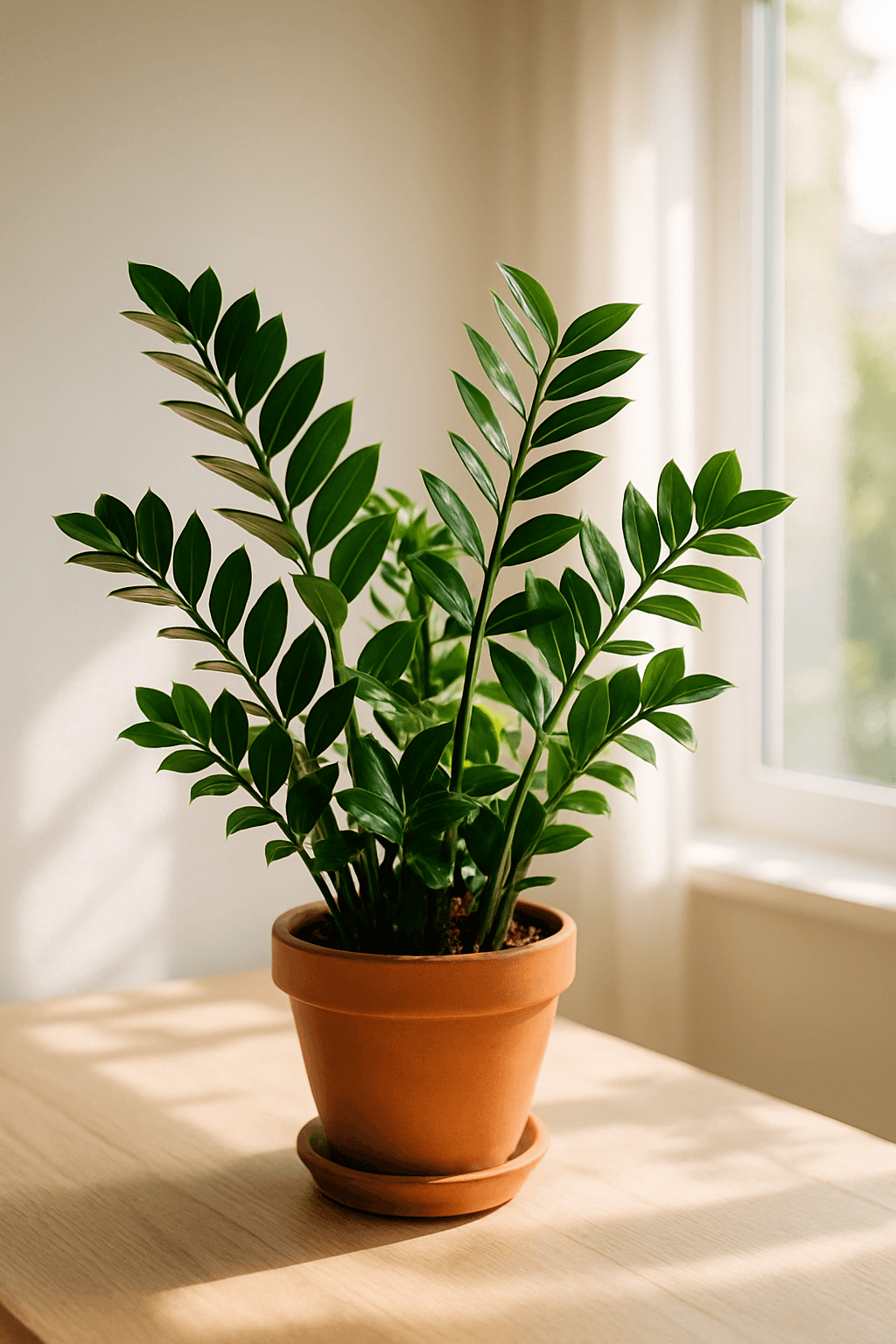
Snake Plant vs ZZ Plant: The Best Low-Maintenance Pick
Both snake plant and ZZ plant survive weeks without water and tolerate genuinely low light — the honest question is which one suits your space better. ZZ's underground rhizomes give it the edge on drought tolerance, letting it skip 3–4 weeks between summer waterings. Snake plant wins on cold tolerance and variety, handling temperatures down to 55°F.
Snake Plant vs ZZ Plant: At a Glance
Both plants have earned their reputation as the most forgiving houseplants available. Water snake plant (Dracaena trifasciata) every 2–6 weeks in summer and every 6–8 weeks in winter. Water ZZ plant (Zamioculcas zamiifolia) every 2–3 weeks in summer and every 4–6 weeks in winter.
Both handle low to bright indirect light and low humidity (30–50%). Neither is safe for cats or dogs — both contain calcium oxalate crystals that cause oral irritation and GI upset (ASPCA).
The key difference most people miss: cold tolerance. Snake plant survives down to 55°F. ZZ needs at least 60°F and shows cold damage near draughty windows in winter.
Snake Plant: What You Need to Know
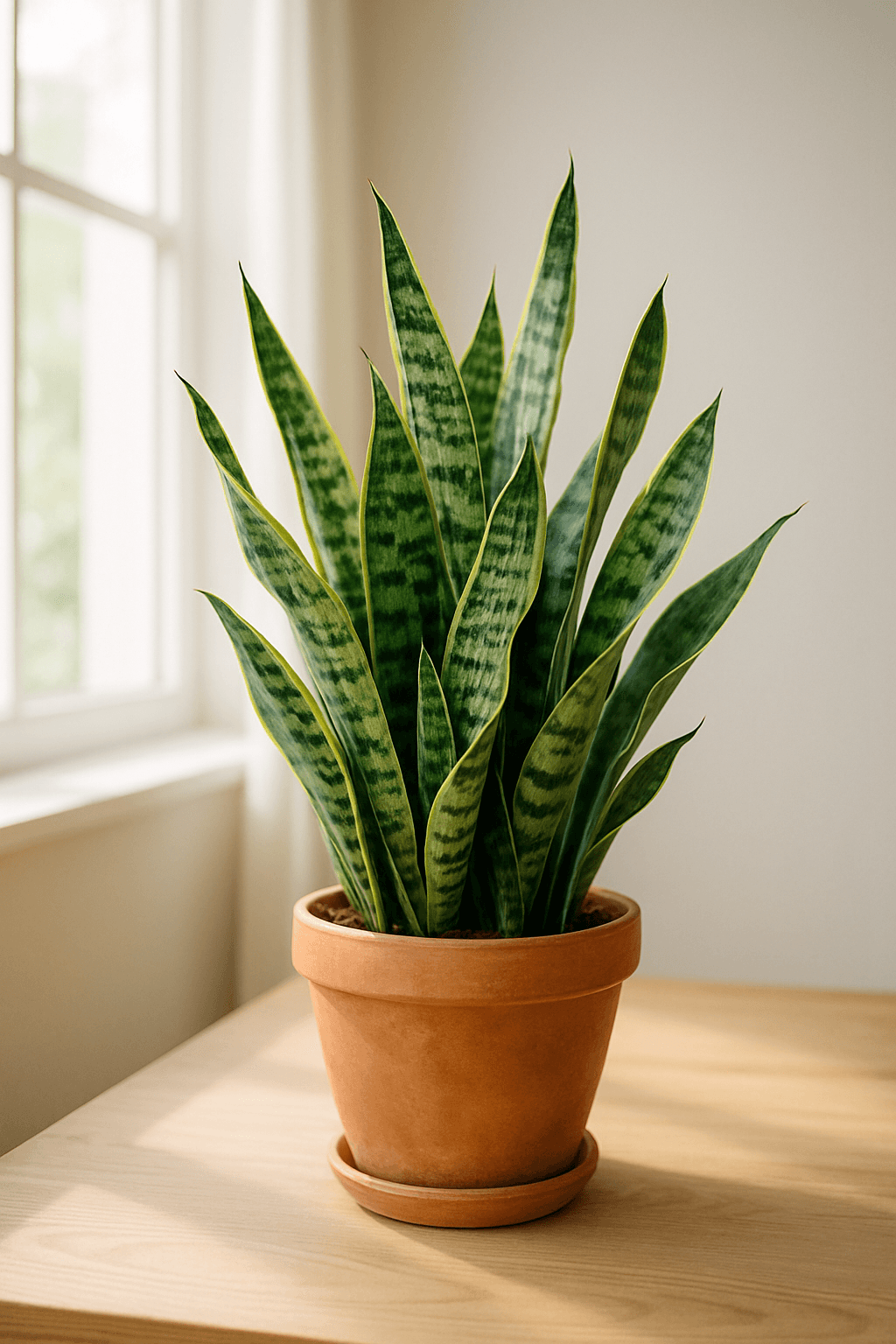
Snake plant's upright, sword-like leaves store water, which is why the most common way to kill one is overwatering. Let the soil dry out completely between waterings — every 2–6 weeks in summer, every 6–8 weeks in winter. When in doubt, wait another week.
Light ranges from low to bright indirect, but low light means slow growth and faded variegation. Golden-edged cultivars like 'Laurentii' and silvery-grey 'Moonshine' need brighter conditions to keep their colour. The compact 'Hahnii' rosette form stays under 12 inches and works well on a desk.
One rule that doesn't bend: toxic to cats and dogs. Calcium oxalate crystals cause drooling, nausea, and GI upset (ASPCA).
ZZ Plant: What You Need to Know
ZZ plant stores water in thick underground rhizomes — potato-like structures that act as a reservoir. That's what lets it survive the kind of neglect that kills most other plants. Water every 2–3 weeks in summer when the top 2 inches of soil are dry, and every 4–6 weeks in winter. It always recovers from drought; it rarely recovers from root rot.
Growth is slow: expect 6–12 inches per year in decent light, less in low light. The glossy, deep-green leaves arranged in arching fronds give it a polished, architectural look. The 'Raven' cultivar produces near-black foliage for a more dramatic effect.
Toxic to cats and dogs, same as snake plant (ASPCA).
What Actually Sets Them Apart?
Drought tolerance is the real dividing line. ZZ's rhizomes give it a buffer snake plant doesn't have. In summer, ZZ genuinely handles 3–4 weeks without water. Snake plant can stretch to 6 weeks in extreme conditions, but it's pushing its limits.
Cold tolerance goes the other way. Snake plant survives down to 55°F; ZZ wants at least 60°F. Near a draughty window in winter, snake plant holds up better.
Variety is snake plant's strongest point. Dozens of cultivars exist, from 6-inch compact rosettes to 4-foot columnar forms, in green, yellow-edged, and silver-grey. ZZ is mostly available in standard deep green and the striking 'Raven' black-leaf form.
Growth habit differs too. Snake plant produces tight upright clusters from the base. ZZ sends up individual arching fronds from the rhizomes, each emerging as a single stem.
Which Should You Choose?
Choose ZZ plant if you travel frequently, forget to water regularly, or want the most drought-tolerant option available. Its rhizomes give it a buffer no other common houseplant matches at the easy end of the spectrum.
Choose snake plant if your room drops below 60°F in winter, you want more visual variety, or you prefer something that grows upright and adds vertical structure. It's also slightly more common and usually cheaper to find.
If you have cats or dogs: neither is safe. A spider plant or calathea is a safer choice. Already have one and want the other? Their watering schedules are close enough to tend both on the same day, and the contrast between ZZ's arching fronds and snake plant's upright spikes looks sharp on a shelf.
The Bottom Line
ZZ plant wins on drought tolerance; snake plant wins on variety, cold resistance, and availability. Both are excellent starting points. Pick ZZ if you travel or forget to water; pick snake plant if you want more choice in shape and size.
Frequently Asked Questions
Can a snake plant or ZZ plant survive in a room with no windows?▾
Both tolerate very low light, but a room with no natural light is too dim for either long-term. They'll hold on for several months but eventually stop growing and may develop root rot as soil never fully dries. A north-facing window is fine for both. If there's truly no natural light, a grow light on a timer solves the problem.
Which is harder to kill, snake plant or ZZ plant?▾
ZZ plant edges ahead, mainly because of the rhizomes. It stores water underground and genuinely survives weeks of complete neglect. Snake plant is close behind. Both are significantly more forgiving than most houseplants — either works well if you're prone to forgetting watering day.
Are snake plants and ZZ plants safe for cats?▾
Neither is safe for cats or dogs. Both contain calcium oxalate crystals that cause oral irritation, drooling, and GI upset when ingested (ASPCA). Symptoms are rarely severe but uncomfortable. If you need a low-light plant that's actually pet-safe, spider plant and calathea are good alternatives.
How often should I water a ZZ plant vs a snake plant?▾
Water ZZ plant every 2–3 weeks in summer and every 4–6 weeks in winter, when the top 2 inches of soil are dry. Water snake plant every 2–6 weeks in summer and every 6–8 weeks in winter, when the soil is completely dry throughout. Both die faster from overwatering than drought — when unsure, wait an extra week.